

Introduction to Cost Accounting
Best use of resources in ancient Indian tradition, meaning, scope & advantages of cost accounting, cost vs financial accounting, standards & costing records.
Explore Unit ➜Cost Accounting introduces the concepts of recording, analysing and controlling the cost of materials, labour and overheads. It helps you understand how the cost of a product or service is determined and how businesses use it for pricing and decision-making.
Each unit contains curated notes, diagrams, important questions and more.
Best use of resources in ancient Indian tradition, meaning, scope & advantages of cost accounting, cost vs financial accounting, standards & costing records.
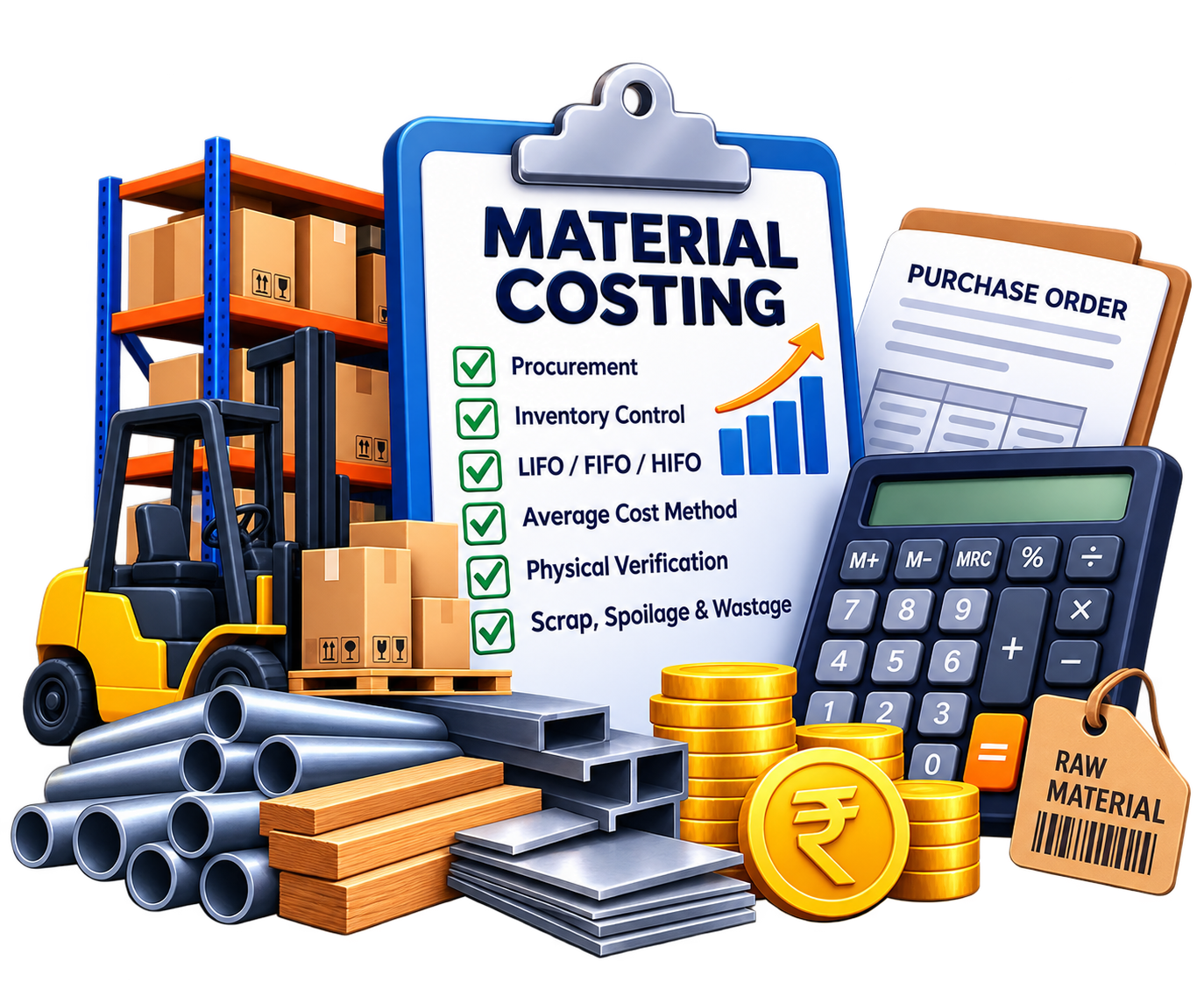
Explore Unit ➜Procurement, inventory control, LIFO, FIFO, HIFO & average cost methods, physical verification, scrap, spoilage and wastage.
Explore Unit ➜Accounting & control of labour cost, time keeping, payroll, overtime, idle time, labour turnover, and Halsey, Rowan & Taylor wage plans.
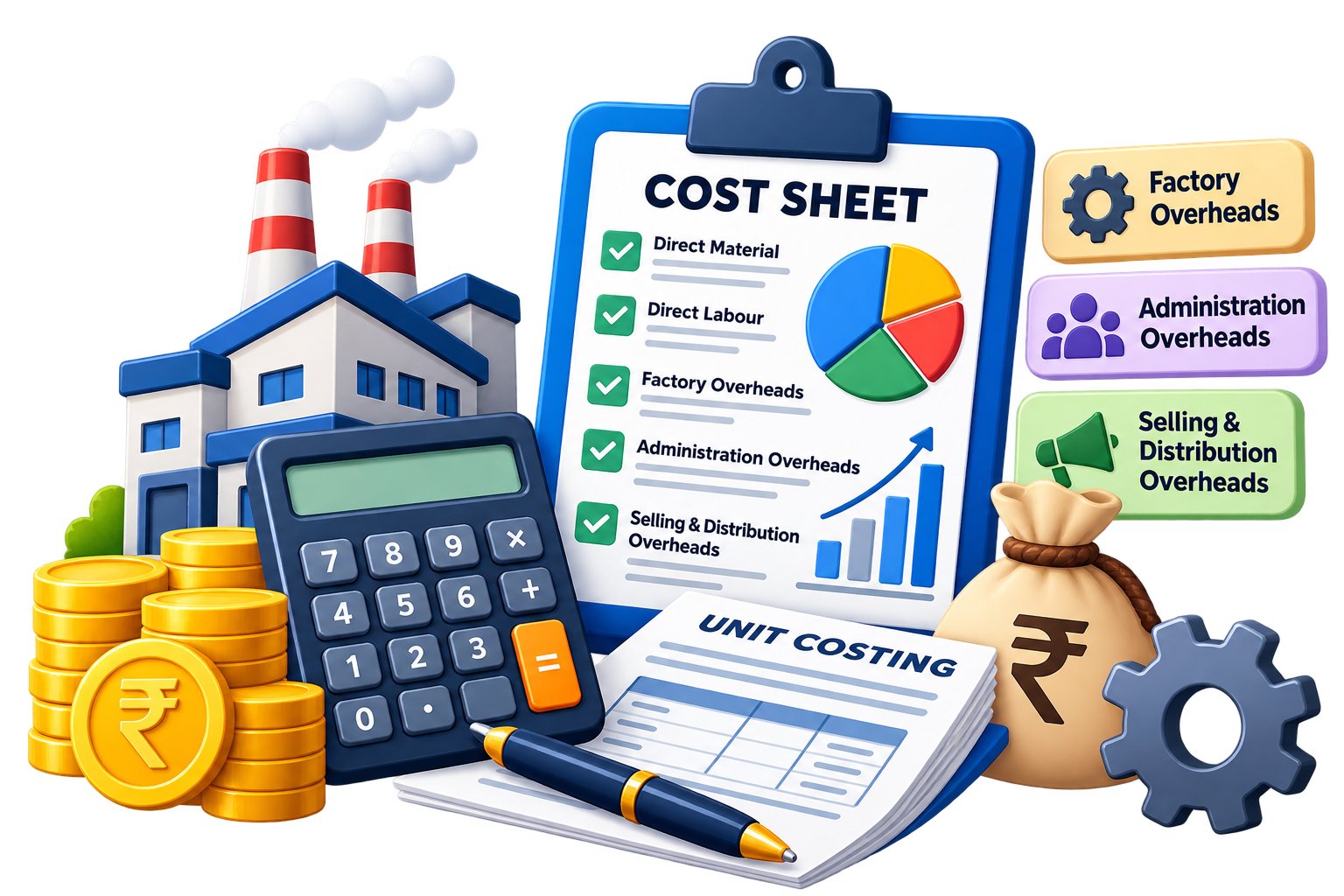
Explore Unit ➜Allocation & absorption of overheads, under/over absorption, treatment of special items, cost sheet and job costing.
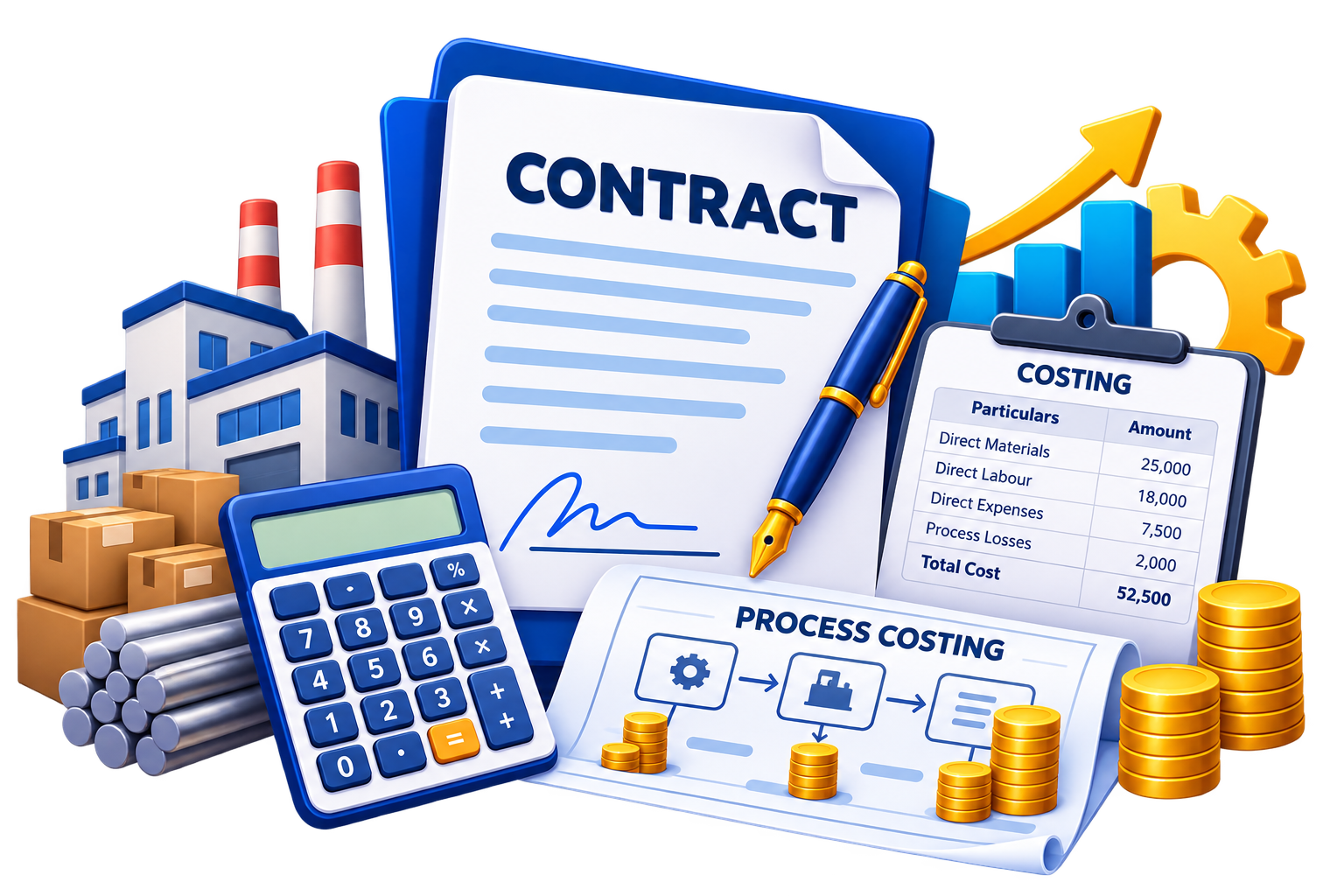
Explore Unit ➜Contract & sub-contract costing, process costing (excluding process losses), joint products and by-products.
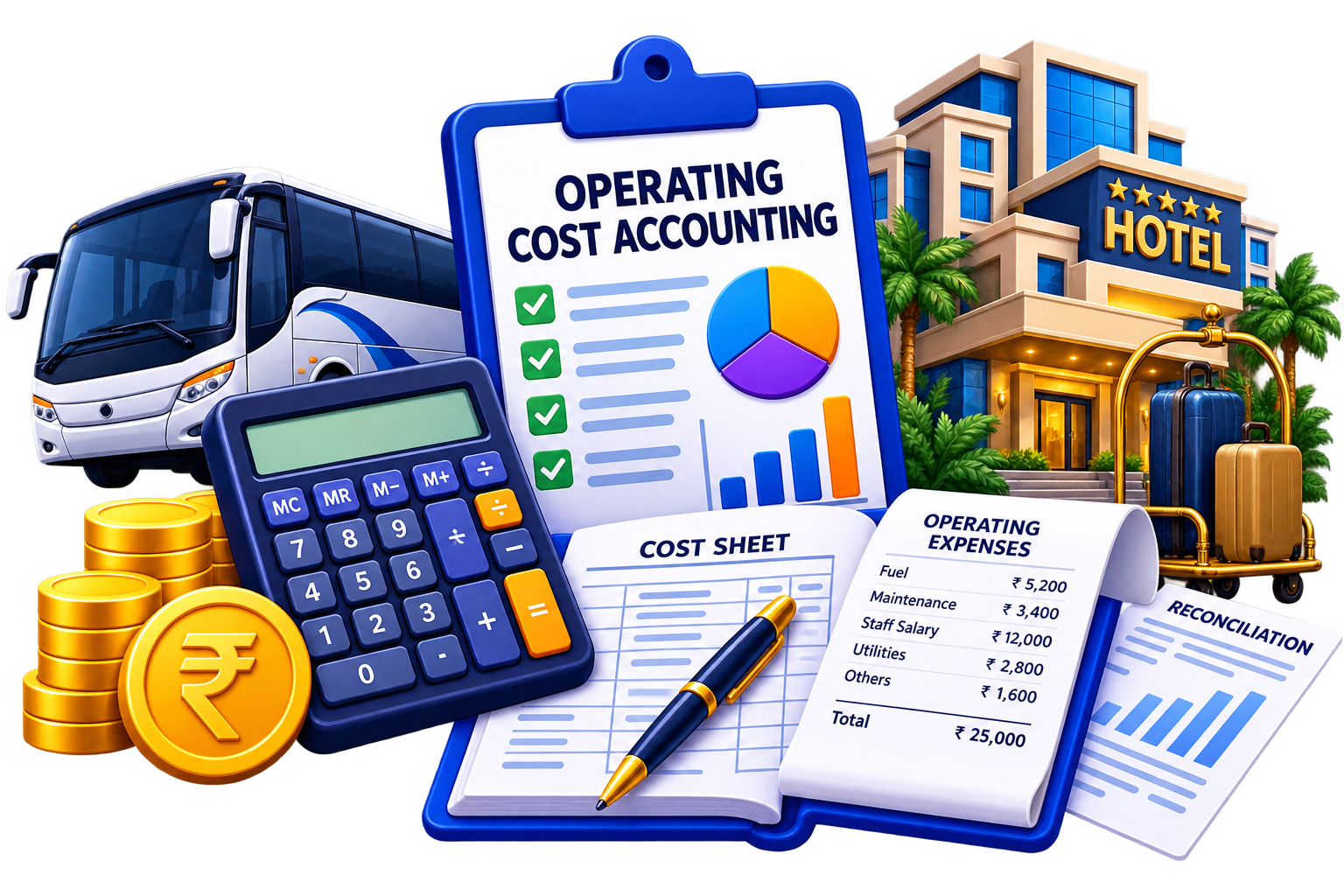
Explore Unit ➜Transportation & hotel service costing, integral and non-integral accounts, and reconciliation of cost and financial accounts.
Explore Unit ➜A complete study resource built around the DAVV B.Com exam pattern.
These Cost Accounting notes for B.Com DAVV follow the official syllabus of Devi Ahilya Vishwavidyalaya, Indore, topic by topic. From the basics of cost accounting in Unit 1 to operating cost accounting in Unit 6, every concept is explained in simple language so you can understand the "why" behind each topic, not just memorize definitions.
Build a strong foundation with our Unit 1 notes covering the principle of best utilization of resources in ancient Indian tradition, the relationship between business ethics and cost control, the meaning, scope and advantages of cost accounting, its difference from financial accounting, cost accounting standards and costing records.
Get a strong grip on material costing — procurement, inventory management and control, and pricing methods like LIFO, FIFO, HIFO, average cost and inflated price method — along with the treatment of scrap, spoilage, defectives and normal/abnormal wastage in our Unit 2 notes.
Struggling with labour costing? Our Unit 3 notes break down time keeping, payroll, overtime, idle time, labour turnover, fringe benefits and the Halsey, Rowan and Taylor incentive schemes with clear numerical examples — frequently asked in Cost Accounting exams.
Understand how indirect costs are handled through our overhead costing notes — classification, allocation and absorption, under and over absorption, treatment of special items — and learn cost sheet preparation and job costing step by step.
Go beyond the basics with notes on contract costing, process costing, joint and by-products, transportation and hotel service costing, integral and non-integral accounts, and the reconciliation of cost and financial accounts.
Every unit includes Cost Accounting important questions commonly asked in DAVV B.Com semester exams, so you can revise efficiently in the final days before your exam without missing high-weightage topics.
Quick answers about Cost Accounting notes for B.Com DAVV students.
The DAVV B.Com Cost Accounting syllabus is divided into 6 units: Introduction to Cost Accounting, Material Costing, Labour Costing, Overheads & Unit Costing, Contract & Process Costing, and Operating Cost Accounting.
Yes, all Cost Accounting notes for B.Com DAVV are completely free to read on CampusNotes directly on the website — no login, signup, or payment required.
There are 6 units in DAVV B.Com Cost Accounting: Introduction to Cost Accounting, Material Costing, Labour Costing, Overheads & Unit Costing, Contract & Process Costing, and Operating Cost Accounting.
Unit 2 covers procurement of materials, inventory management and control, inventory accounting methods such as LIFO, FIFO, HIFO, average cost and inflated price method, physical verification, treatment of slow and non-moving stock and losses, and the treatment of scrap, spoilage, defective work and normal/abnormal wastage.
Yes, CampusNotes is fully mobile-friendly, so you can study Cost Accounting notes on any device without downloading anything.