



Indian Contract Act 1872 (General Principles)
Rules and government control over business in ancient India, contract and its types, offer & acceptance, essentials of a valid contract, termination and breach of contract.
Explore Unit ➜Business Law introduces the legal rules that govern everyday business activities. It helps you understand contracts, negotiable instruments, partnerships, consumer rights, foreign exchange and competition law, and how they protect both businesses and consumers.

Each unit contains curated notes, diagrams, important questions and more.
Rules and government control over business in ancient India, contract and its types, offer & acceptance, essentials of a valid contract, termination and breach of contract.
Explore Unit ➜Contract of indemnity, guarantee, bailment, lien, pledge and agency, with a mock trial / moot court activity.
Explore Unit ➜Negotiable instruments in ancient Indian tradition, Negotiable Instruments Act 1881, Amendment Act 2002 and the Indian Partnership Act 1932.
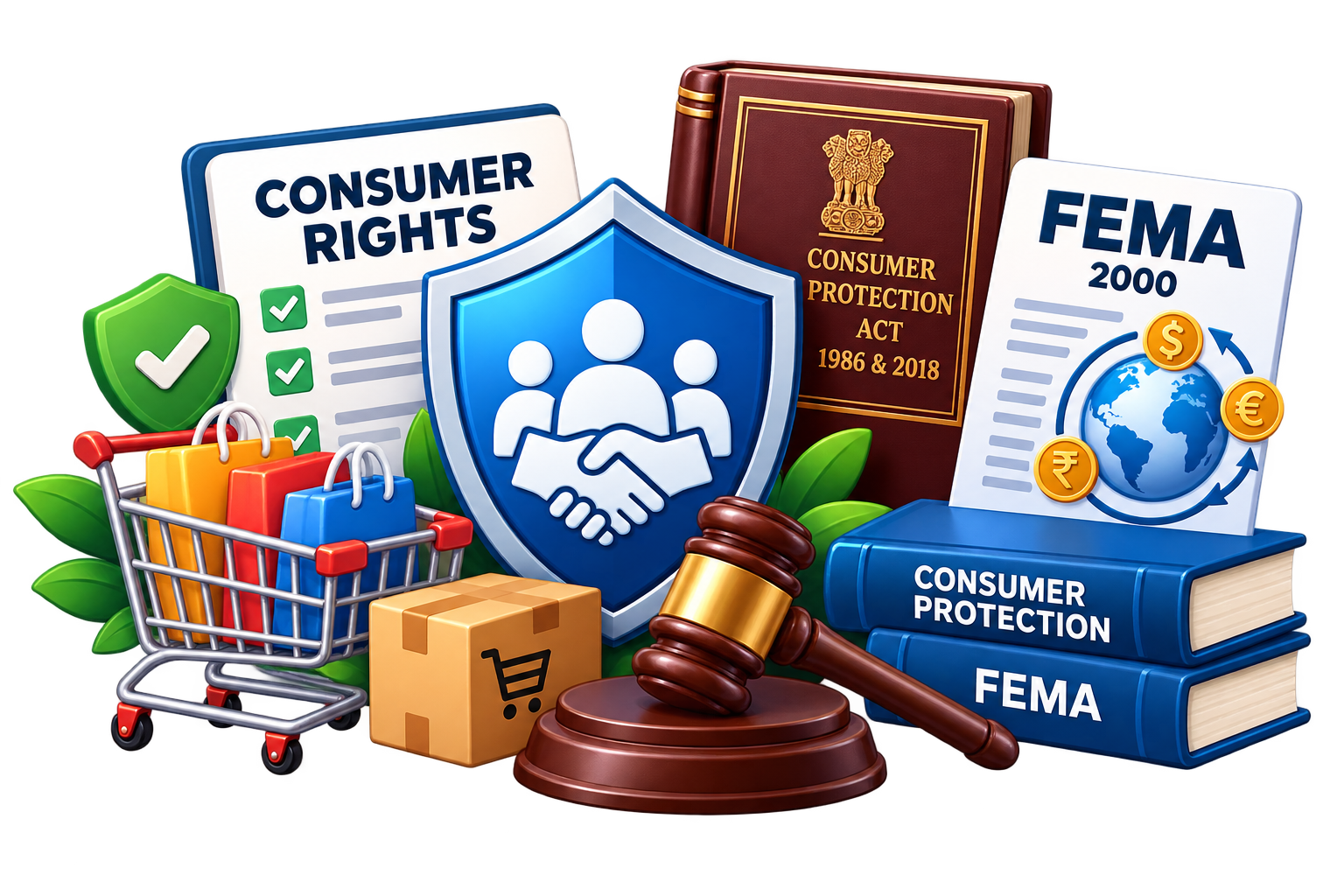
Explore Unit ➜Consumer protection in India's ancient trade system, Consumer Protection Act 1986 and 2018, and the Foreign Exchange Management Act 2000 (FEMA).
Explore Unit ➜Introduction, concept, objectives and major provisions of the Competition Act 2002, and the composition, powers and functions of the Competition Commission of India.
Explore Unit ➜A complete study resource built around the DAVV B.Com exam pattern.
These Business Law notes for B.Com DAVV follow the official syllabus of Devi Ahilya Vishwavidyalaya, Indore, topic by topic. From the Indian Contract Act in Unit 1 to the Competition Act in Unit 5, every law is explained in simple language so you can understand the "why" behind each provision, not just memorize sections.
Build a strong foundation with our Unit 1 notes covering the background of rules and government control over business in ancient Indian tradition, the meaning and types of contracts, offer and acceptance, essential features of a valid contract, termination of contracts and consequences of breach of contract.
Get a clear understanding of the contract of indemnity, contract of guarantee, bailment, lien, pledge and agency in our Unit 2 notes, with case-based examples that are frequently asked in Business Law exams.
Understand promissory notes, bills of exchange and cheques through our Negotiable Instruments Act 1881 notes, including the 2002 amendment, and learn the rights and duties of partners under the Indian Partnership Act 1932.
Learn how consumers are protected in India through the Consumer Protection Act and how cross-border transactions are regulated under the Foreign Exchange Management Act 2000 (FEMA), with simple explanations and case study examples.
Go through the concept, objectives and major provisions of the Competition Act 2002, along with the composition, powers and functions of the Competition Commission of India (CCI), explained in a clear and exam-friendly manner.
Every unit includes Business Law important questions commonly asked in DAVV B.Com semester exams, so you can revise efficiently in the final days before your exam without missing high-weightage topics.
Quick answers about Business Law notes for B.Com DAVV students.
The DAVV B.Com Business Law syllabus is divided into 5 units: Indian Contract Act 1872 (General Principles), Indian Contract Act 1872 (Specific Contracts), Negotiable Instruments Act & Indian Partnership Act, Consumer Protection & FEMA, and the Competition Act 2002.
Yes, all Business Law notes for B.Com DAVV are completely free to read on CampusNotes directly on the website — no login, signup, or payment required.
There are 5 units in DAVV B.Com Business Law: Indian Contract Act 1872 (General Principles), Indian Contract Act 1872 (Specific Contracts), Negotiable Instruments Act & Indian Partnership Act, Consumer Protection & FEMA, and the Competition Act 2002.
Unit 2 covers the specific contracts under the Indian Contract Act 1872: contract of indemnity, contract of guarantee, contract of bailment, contract of lien, contract of pledge and contract of agency, along with a mock trial or moot court activity.
Yes, CampusNotes is fully mobile-friendly, so you can study Business Law notes on any device without downloading anything.