
Introduction to Auditing
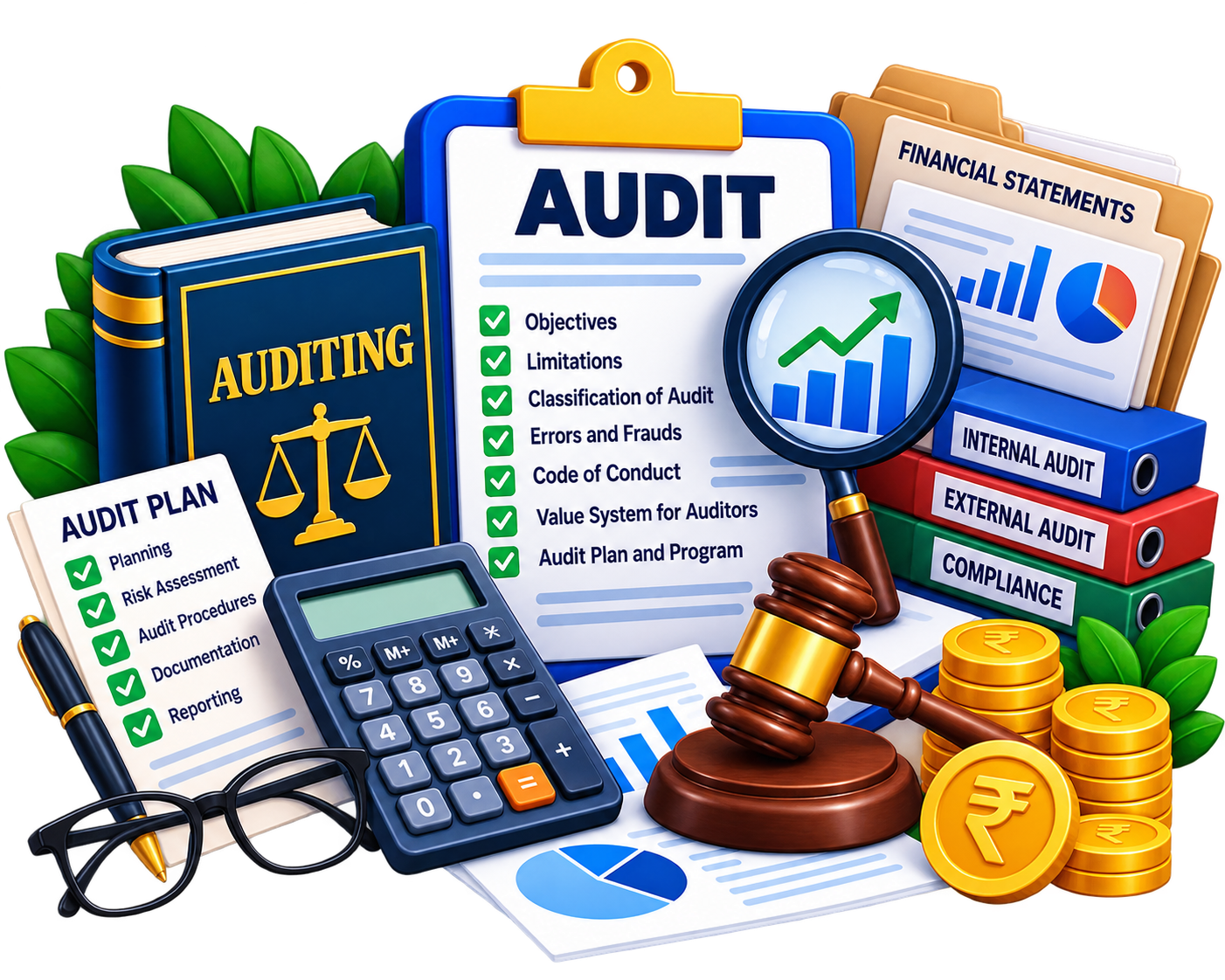
Meaning and nature of auditing, objectives and limitations, classification of audit, errors and frauds, code of conduct and value system for auditors, and audit plan and program.
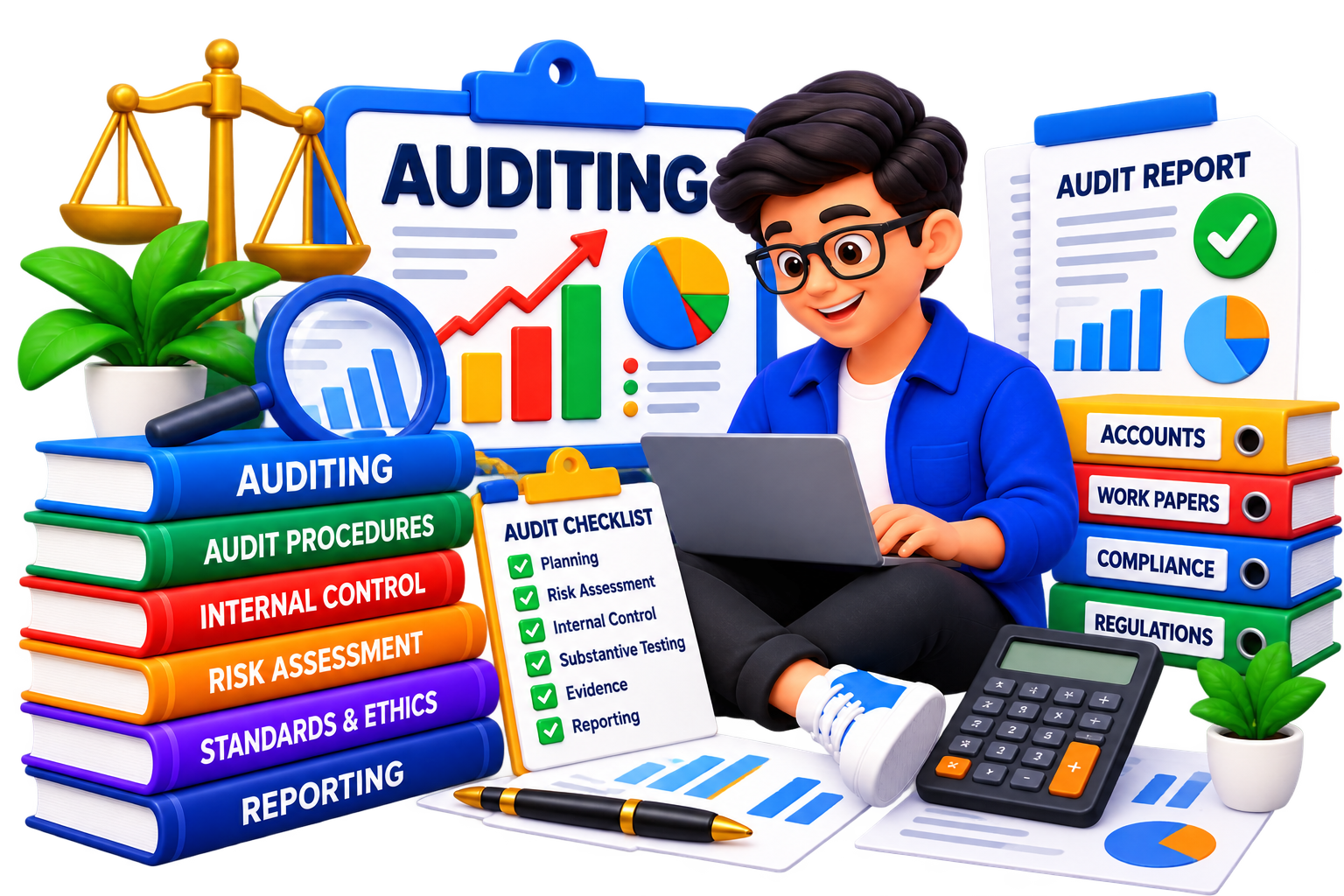
Explore Unit ➜Auditing teaches you how financial records are examined and verified by an independent auditor. It covers audit objectives, internal control, vouching and verification, company audit under the Companies Act 2013, the auditor's report and special areas of audit.
Each unit contains curated notes, diagrams, important questions and more.
Meaning and nature of auditing, objectives and limitations, classification of audit, errors and frauds, code of conduct and value system for auditors, and audit plan and program.
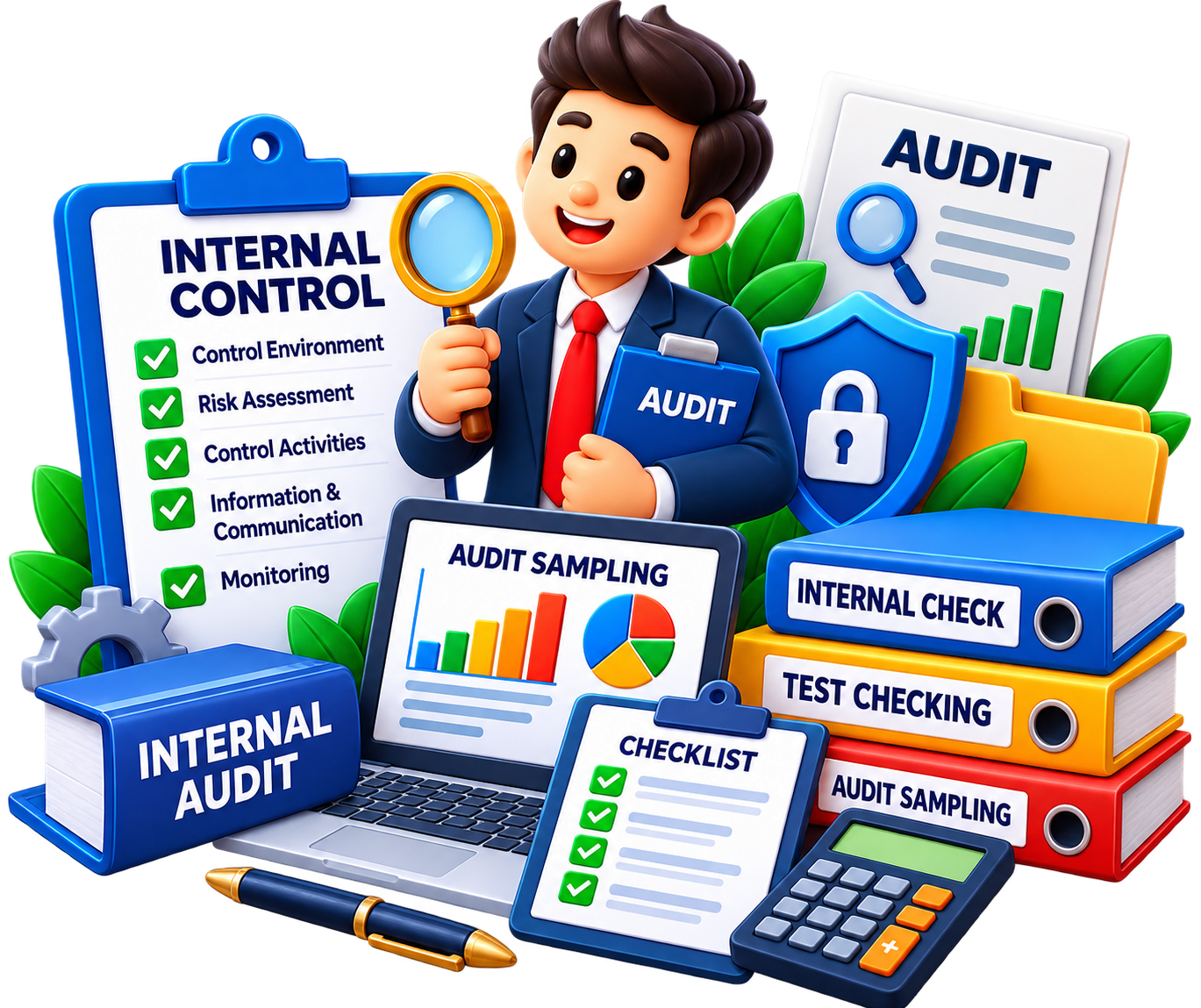
Explore Unit ➜Meaning and objectives of internal control and internal check, features of a good internal control system, internal control questionnaire, checklist, internal audit, test checking and audit sampling.
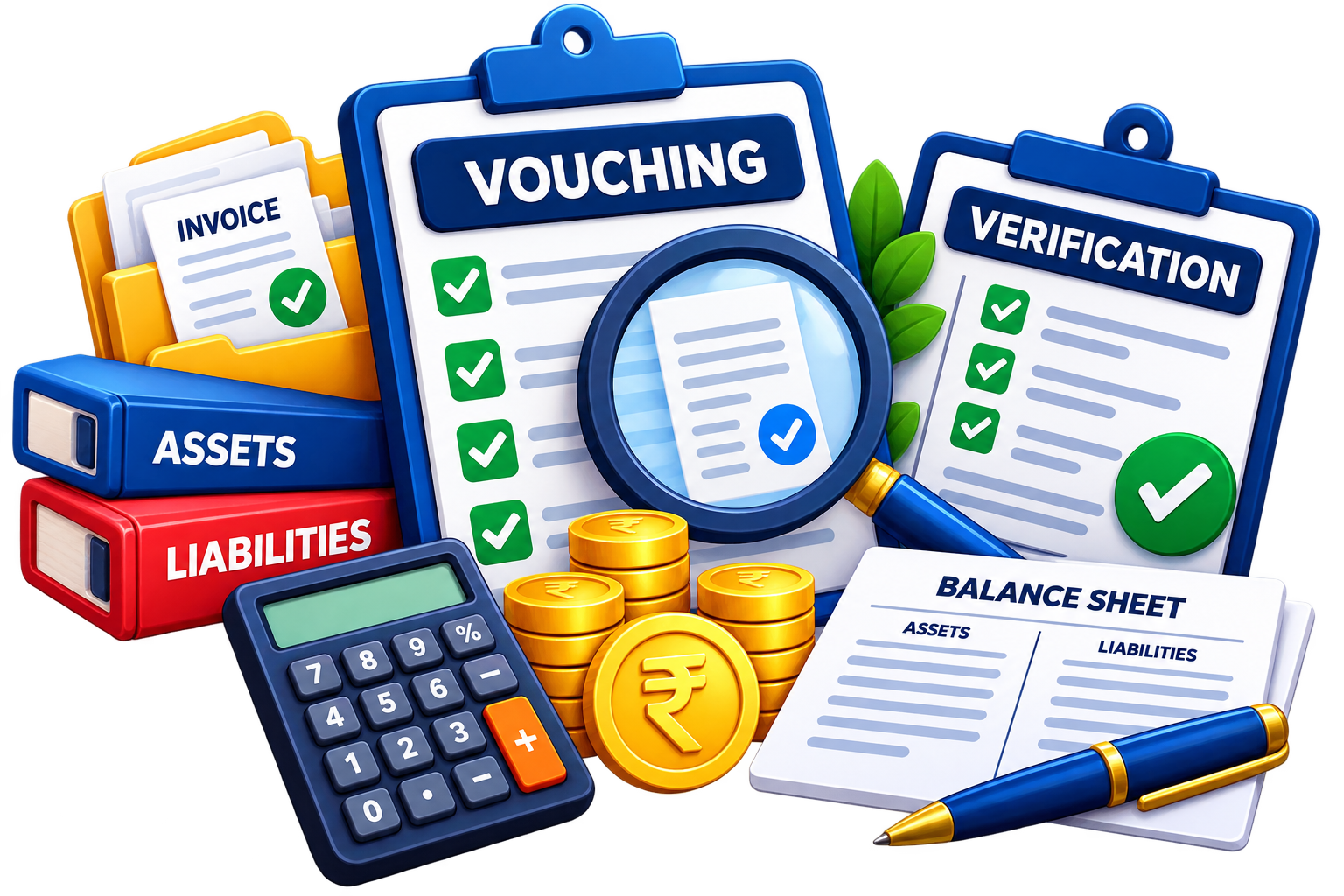
Explore Unit ➜Meaning and objective of vouching, and verification of assets and liabilities.
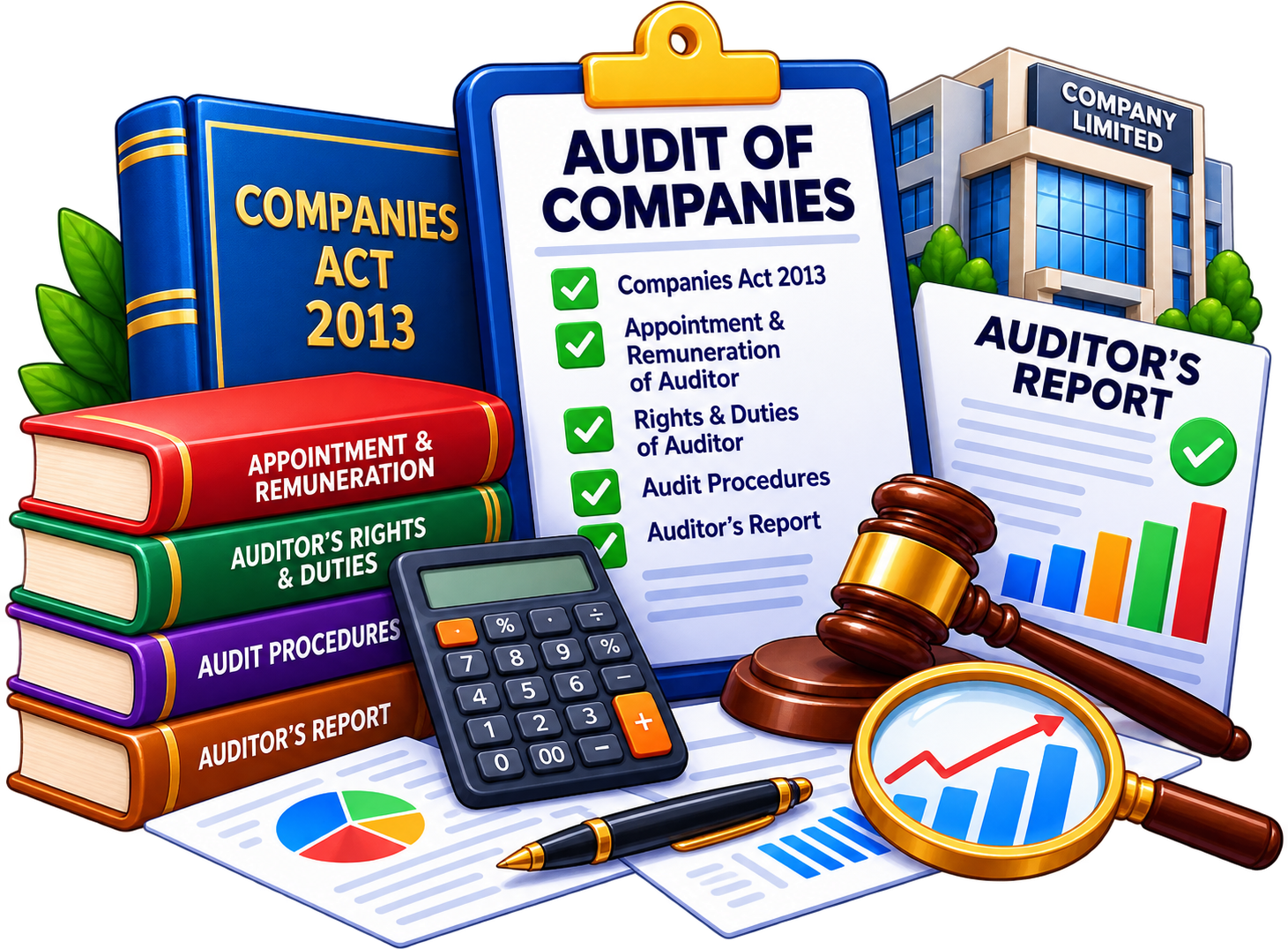
Explore Unit ➜Audit of a company under the Companies Act 2013, appointment and remuneration of an auditor, rights and duties of an auditor, and the auditor's report.
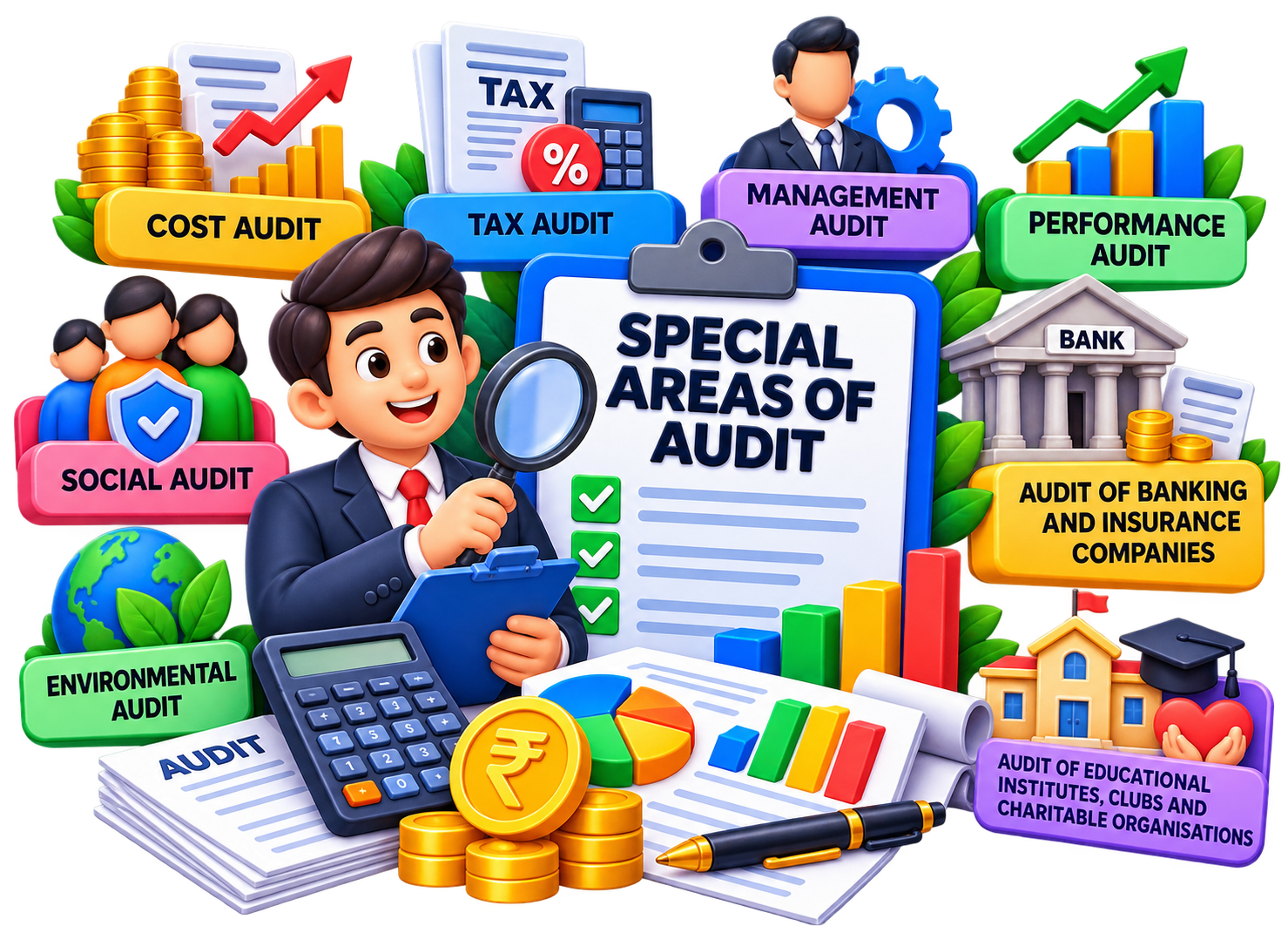
Explore Unit ➜Cost audit, tax audit, management audit, performance audit, social audit, environmental audit, audit of banking and insurance companies, and audit of educational institutes, clubs and charitable organisations.
Explore Unit ➜A complete study resource built around the DAVV B.Com exam pattern.
These Auditing notes for B.Com DAVV follow the official syllabus of Devi Ahilya Vishwavidyalaya, Indore, topic by topic. From the basics of auditing in Unit 1 to special areas of audit in Unit 5, every concept is explained in simple language with examples, so you understand the ideas instead of just memorizing them.
Build a strong foundation with our Unit 1 notes covering the meaning, nature and objectives of auditing, classification of audit, errors and frauds, and the audit plan and program.
Understand the features of a good internal control system, the internal control questionnaire, internal audit, test checking and audit sampling.
Learn the meaning and objective of vouching and how the verification of assets and liabilities is carried out by an auditor.
Go through the company audit under the Companies Act 2013, the appointment and remuneration of an auditor, the rights and duties of an auditor and the auditor's report.
Cover cost audit, tax audit, management audit, performance audit, social and environmental audit, and the audit of banking, insurance, educational and charitable institutions in an exam-friendly manner.
Every unit includes Auditing important questions commonly asked in DAVV B.Com semester exams, so you can revise efficiently in the final days before your exam without missing high-weightage topics.
Quick answers about Auditing notes for B.Com DAVV students.
The DAVV B.Com Auditing syllabus is divided into 5 units: Introduction to Auditing, Internal Control, Internal Check and Audit Sampling, Vouching and Verification, Audit of Companies, and Special Areas of Audit.
Yes, all Auditing notes for B.Com DAVV are completely free to read on CampusNotes directly on the website — no login, signup, or payment required.
There are 5 units in DAVV B.Com Auditing: Introduction to Auditing, Internal Control, Internal Check and Audit Sampling, Vouching and Verification, Audit of Companies, and Special Areas of Audit.
Unit 4 covers the audit of companies under the Companies Act 2013, including the appointment and remuneration of an auditor, the rights and duties of an auditor and the auditor's report.
Yes, CampusNotes is fully mobile-friendly, so you can study Auditing notes on any device without downloading anything.