Complete DAVV BCA Cyber Security Syllabus Coverage
These Cyber Security notes for BCA DAVV follow the
official syllabus of Devi Ahilya Vishwavidyalaya, Indore, topic
by topic. From cryptography basics in Unit 1 to security
policies & standards in Unit 5, every concept is explained
in simple language so you can understand the "why" behind
each topic, not just memorize definitions.
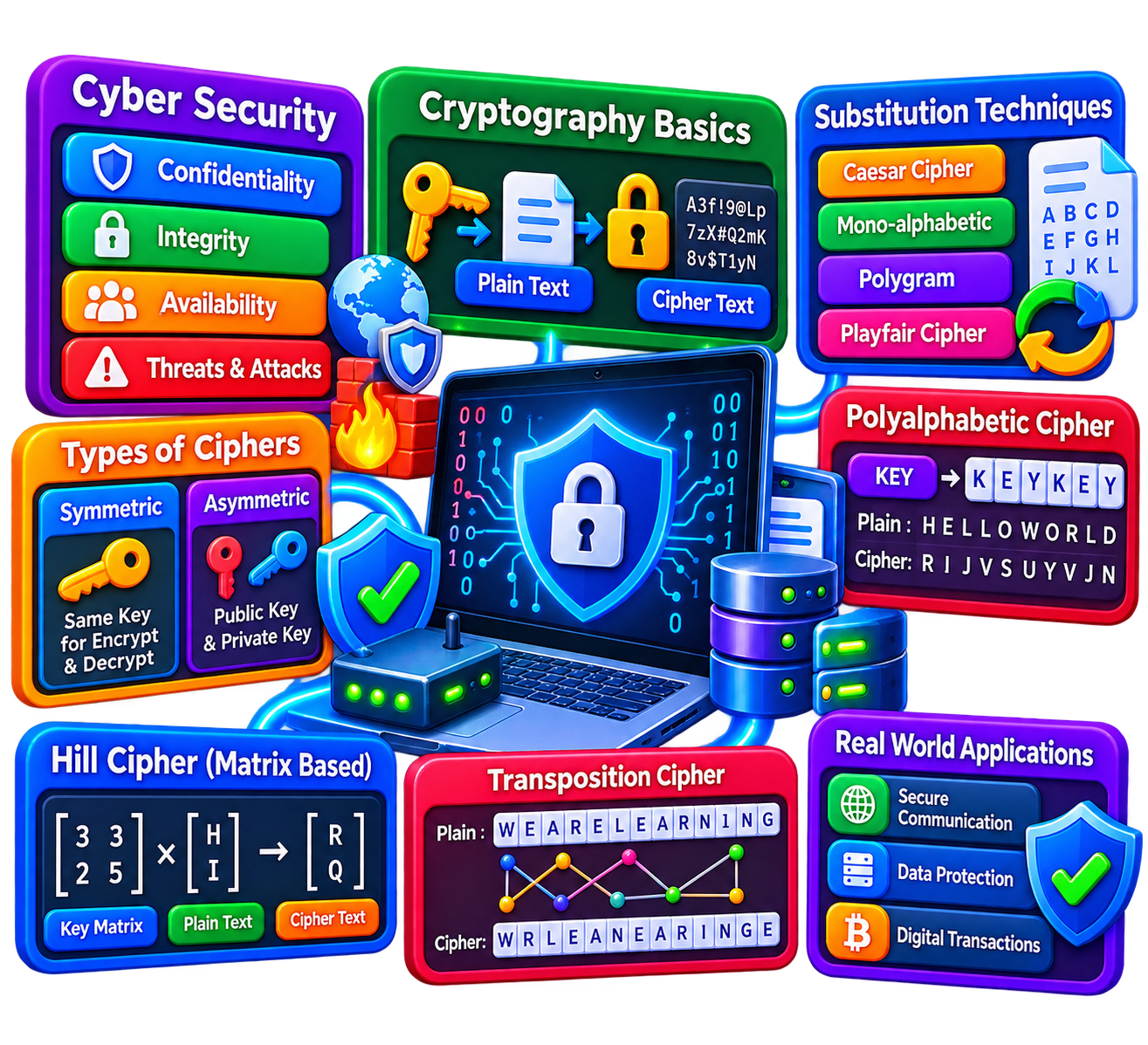
Cyber Security & Cryptography Basics
Build a strong foundation with our Unit 1 notes covering
the need for cyber security, plain text & cipher text, and
substitution techniques including Caesar Cipher, Mono-alphabetic
Cipher, Polygram, Polyalphabetic Substitution, Playfair Cipher,
Hill Cipher, and Transposition Cipher.
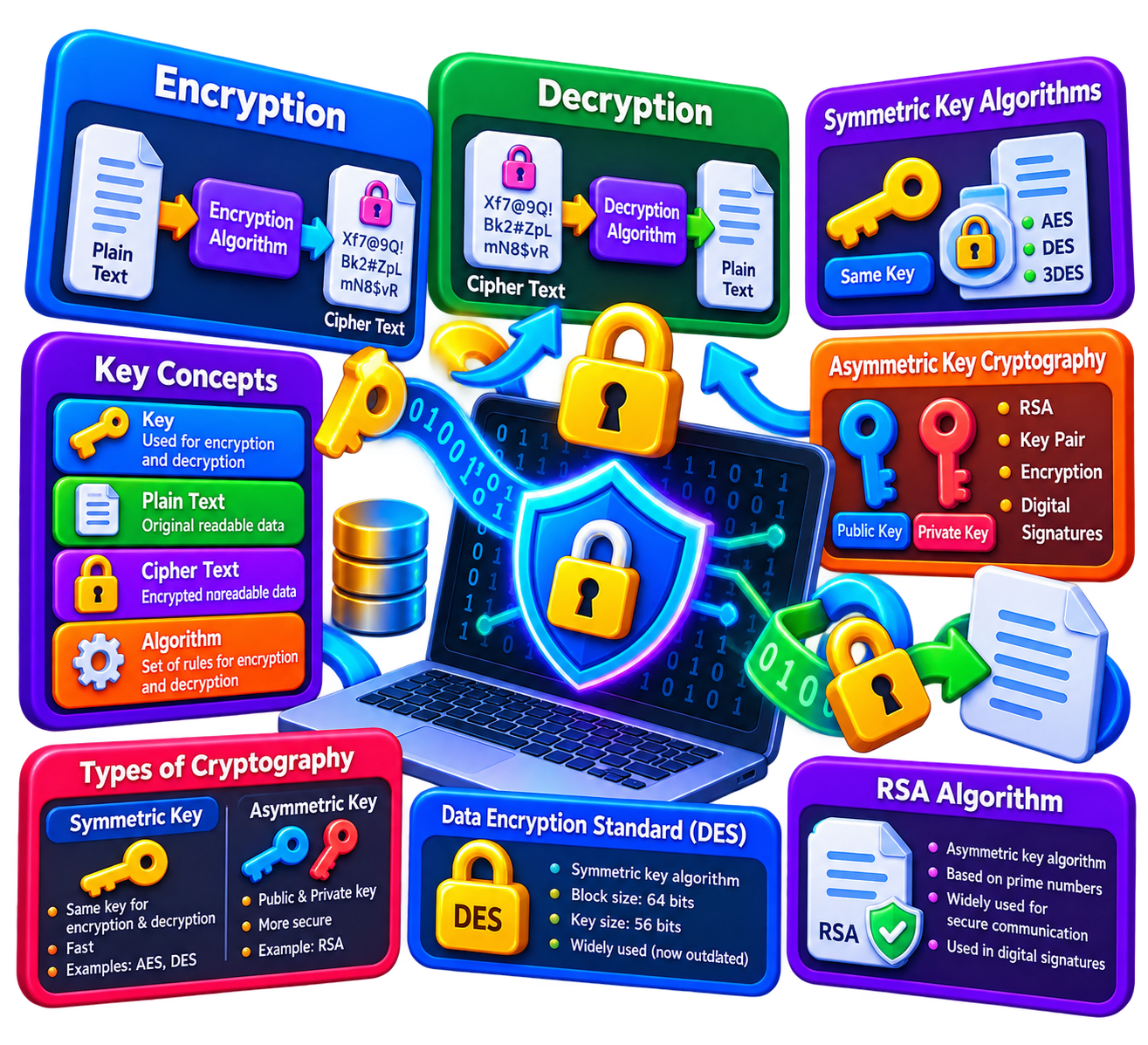
Encryption, Decryption & Key Algorithms
Get a strong grip on encryption & decryption,
symmetric key algorithms and AES, the history and overview of
asymmetric key cryptography, the RSA algorithm, and
the Data Encryption Standard (DES) — core topics
for both exams and real-world security work.
Network Security, Firewalls & VPNs Made Easy
Struggling with network security notes? Our Unit 3
notes break down types of attacks, TCP/IP basics, firewalls,
virtual private networks (VPN), SSL, TLS, SHTTP, the time
stamping protocol, secure electronic transaction (SET), and
e-mail security — with clear, step-by-step explanations.
Information Systems Security
Understand how organizations protect their data through our
information systems security notes — covering types
& development of information systems, the need for
information security, threats to information systems,
information assurance, and security risk analysis.
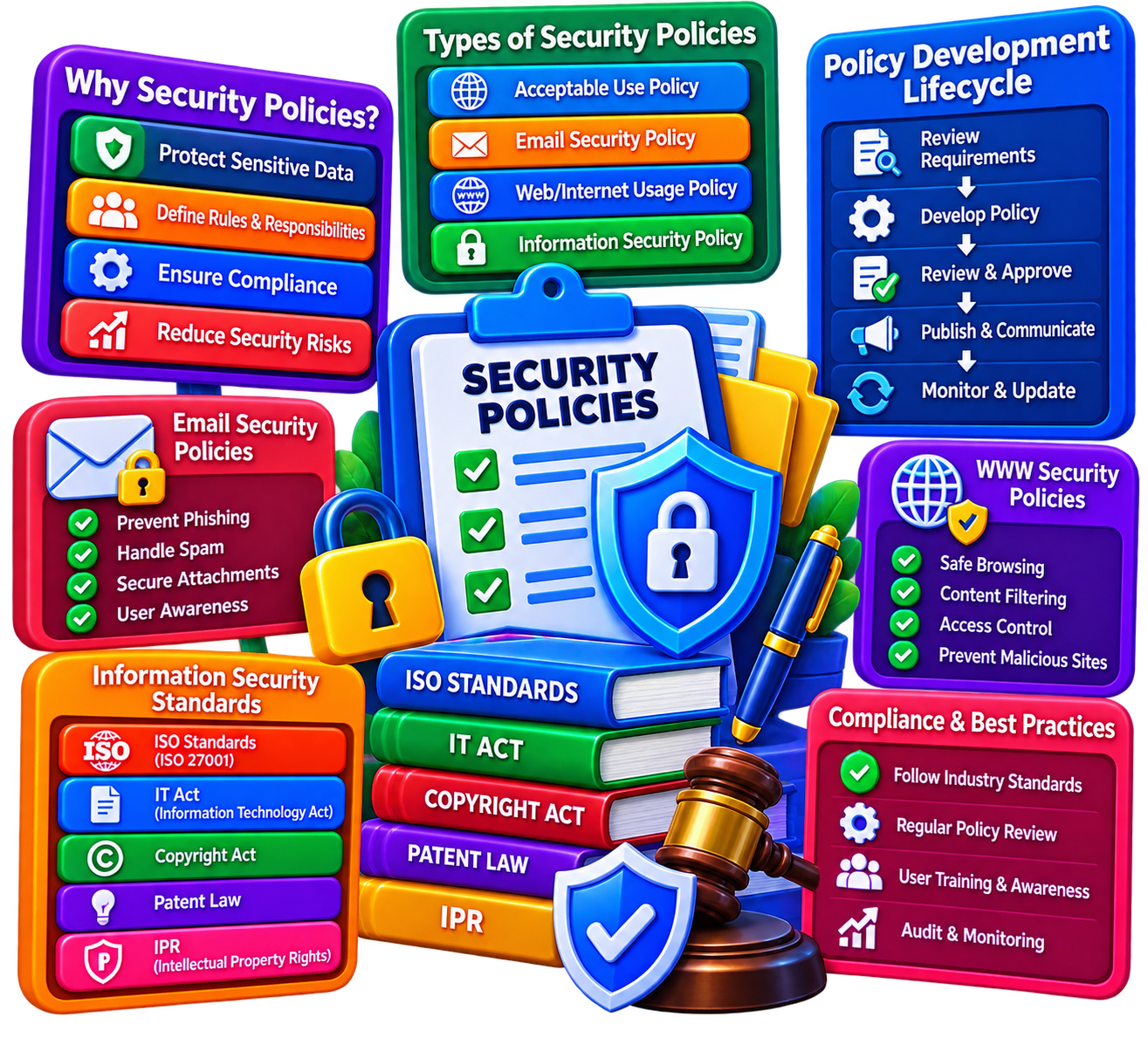
Security Policies & Standards
Go beyond textbook basics with notes on why security policies
should be developed, WWW & email security policies, the
policy review & publishing process, and information
security standards — ISO, the IT Act, Copyright Act, Patent
Law, and IPR.
Exam-Focused Important Questions
Every unit includes Cyber Security important questions
commonly asked in DAVV BCA semester exams, so you can revise
efficiently in the final days before your exam without missing
high-weightage topics.