UNIT 1
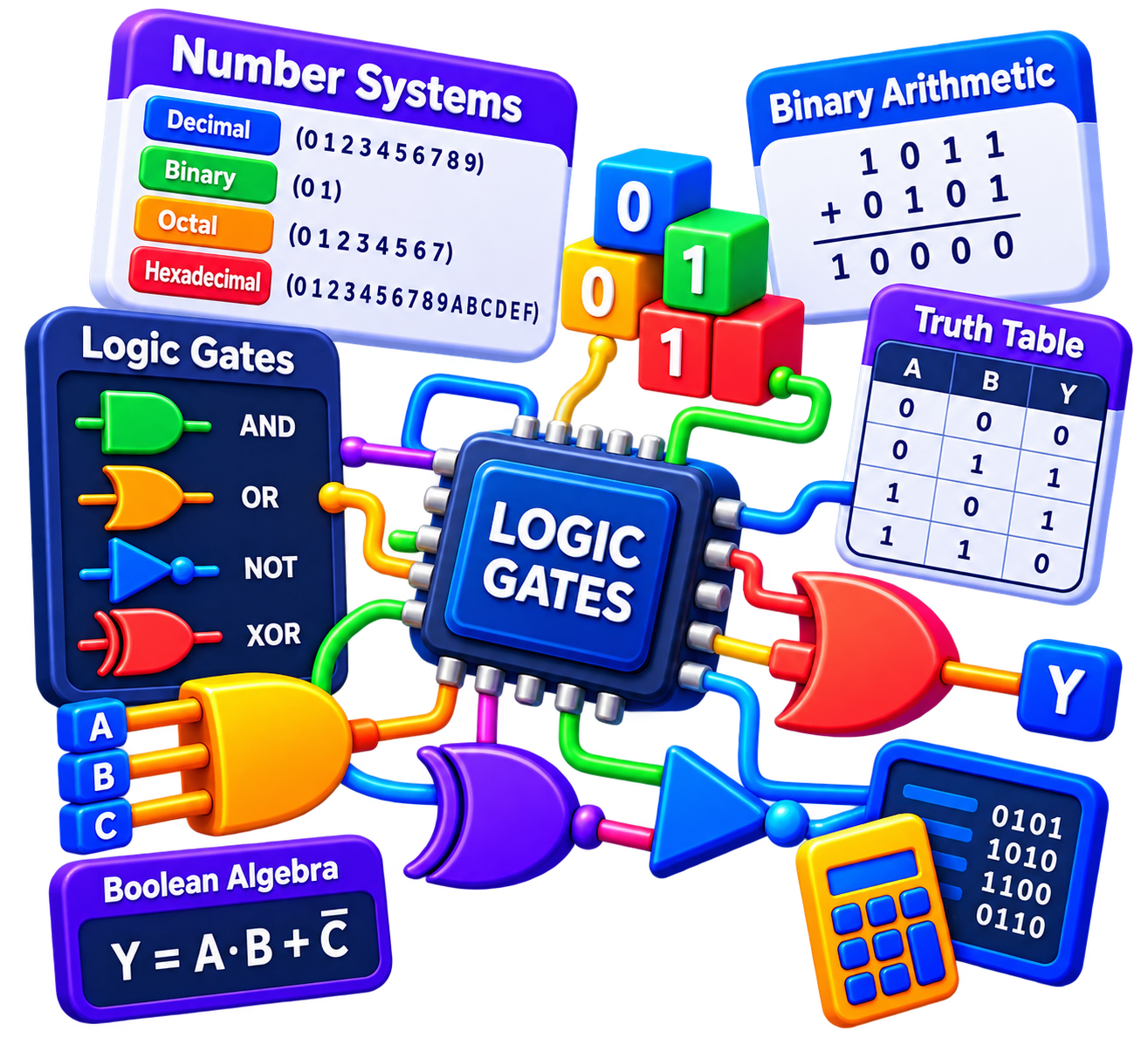
Number Systems & Logic Gates
Number system conversions, binary arithmetic, binary codes, error codes, logic gates and Boolean algebra.
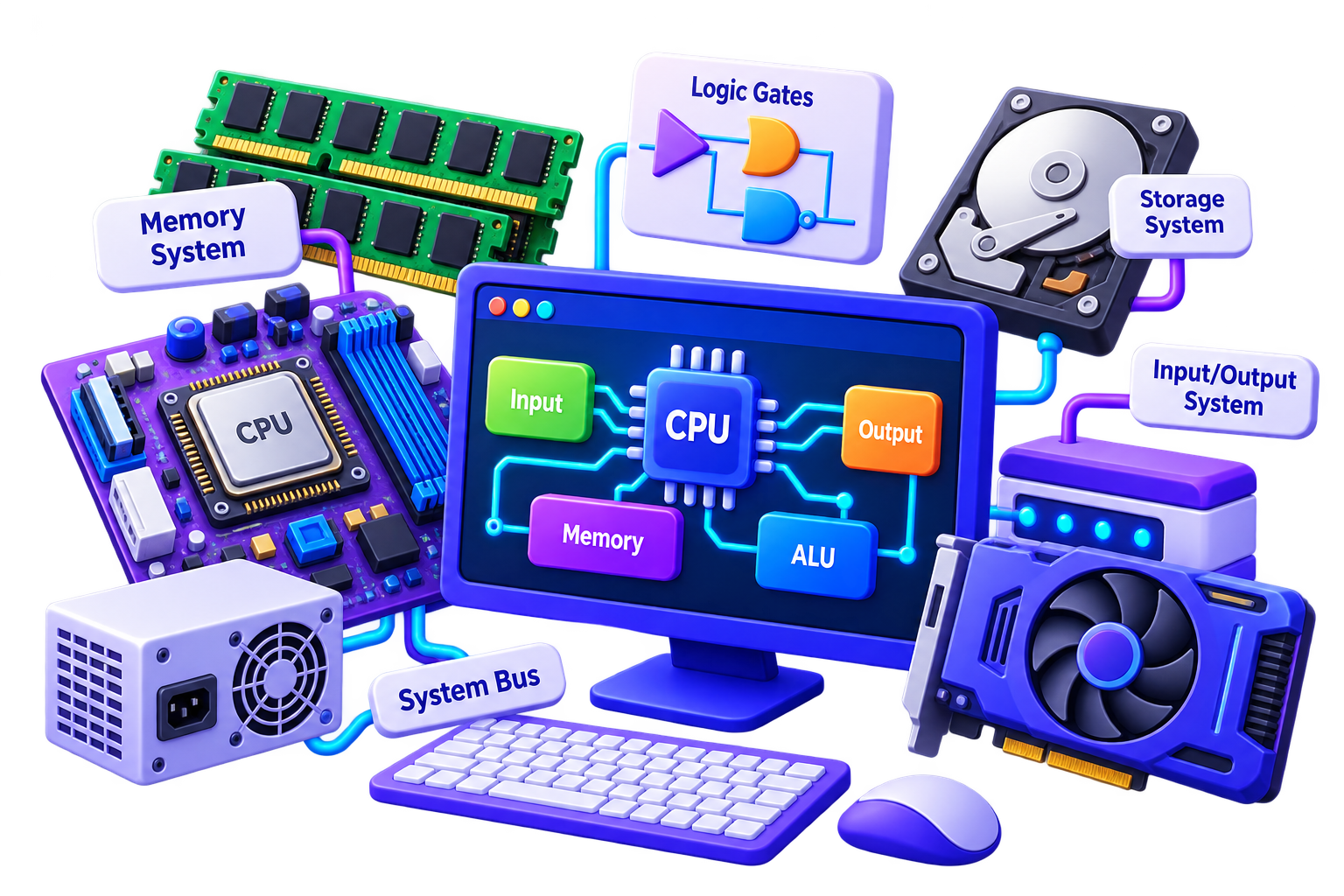
Explore Unit ➜Computer Architecture introduces the concepts of number systems, logic gates, digital circuits, computer organization and memory systems. It helps you understand how a computer's hardware is designed and how it processes and stores data at the lowest level.


Each unit contains curated notes, diagrams, important questions and more.
Number system conversions, binary arithmetic, binary codes, error codes, logic gates and Boolean algebra.
Explore Unit ➜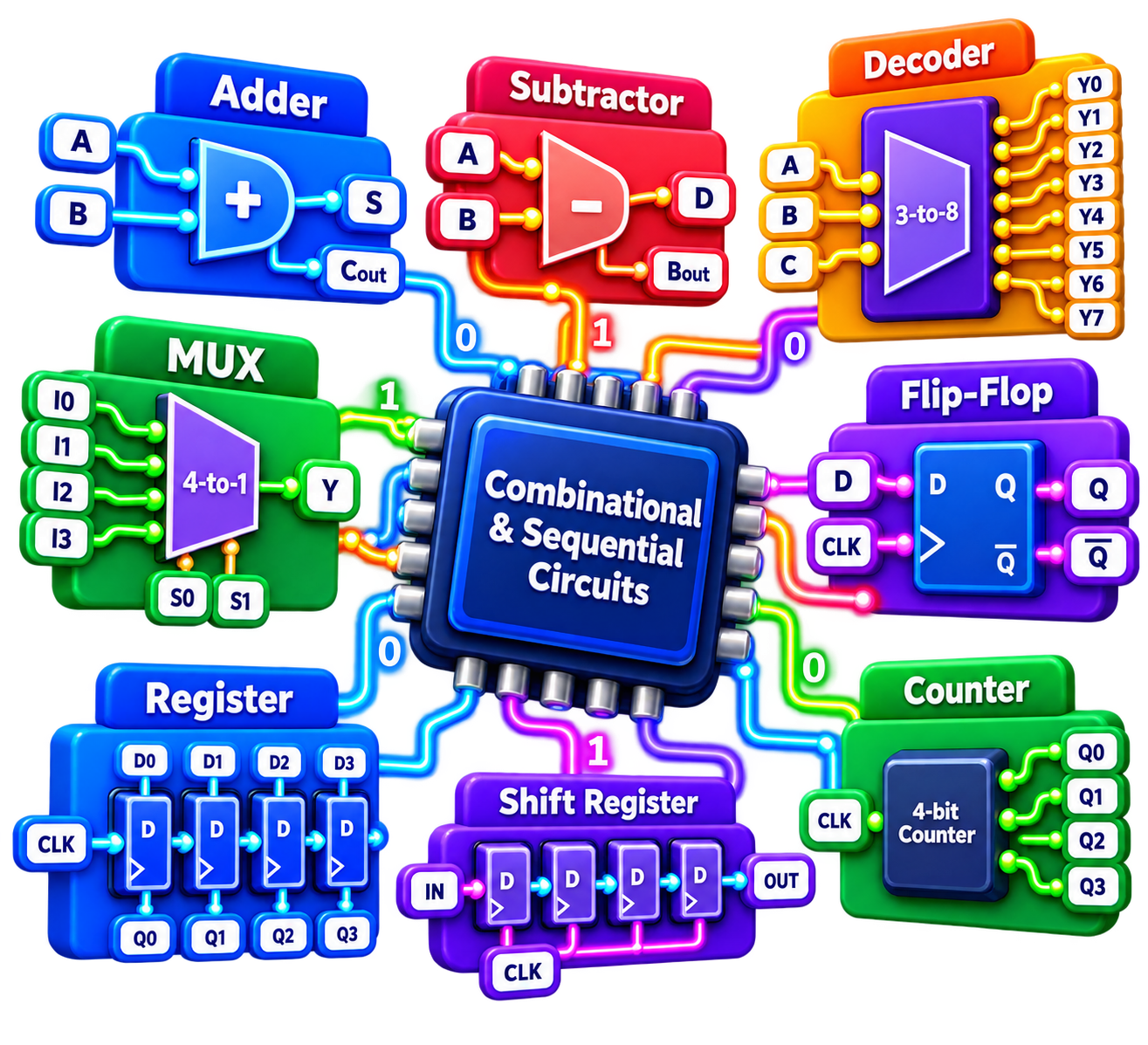
Adders, subtractors, decoders, multiplexers, flip-flops, registers, shift registers and counters.
Explore Unit ➜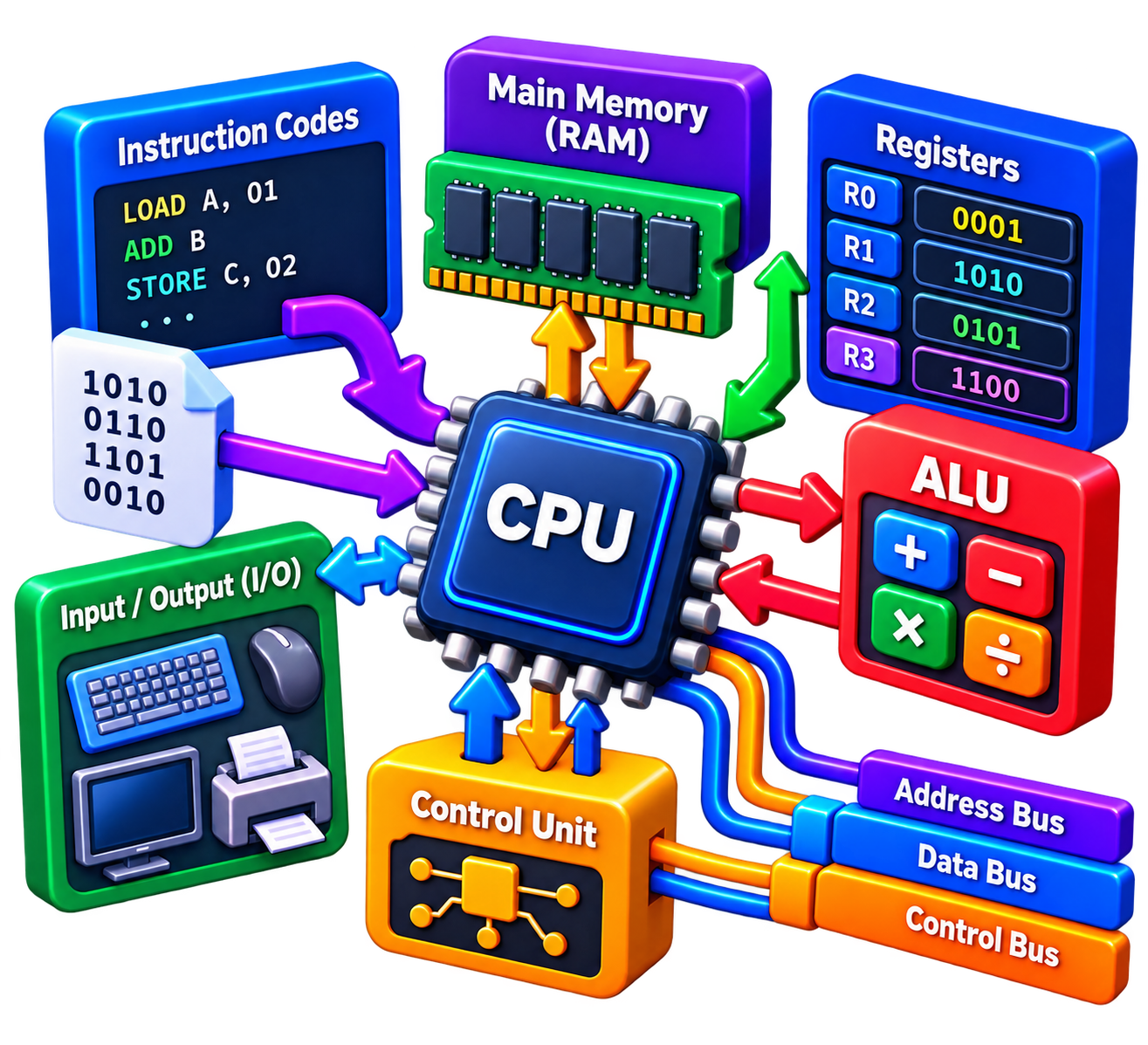
Instruction codes, computer registers, addressing modes, register transfer and micro-operations.
Explore Unit ➜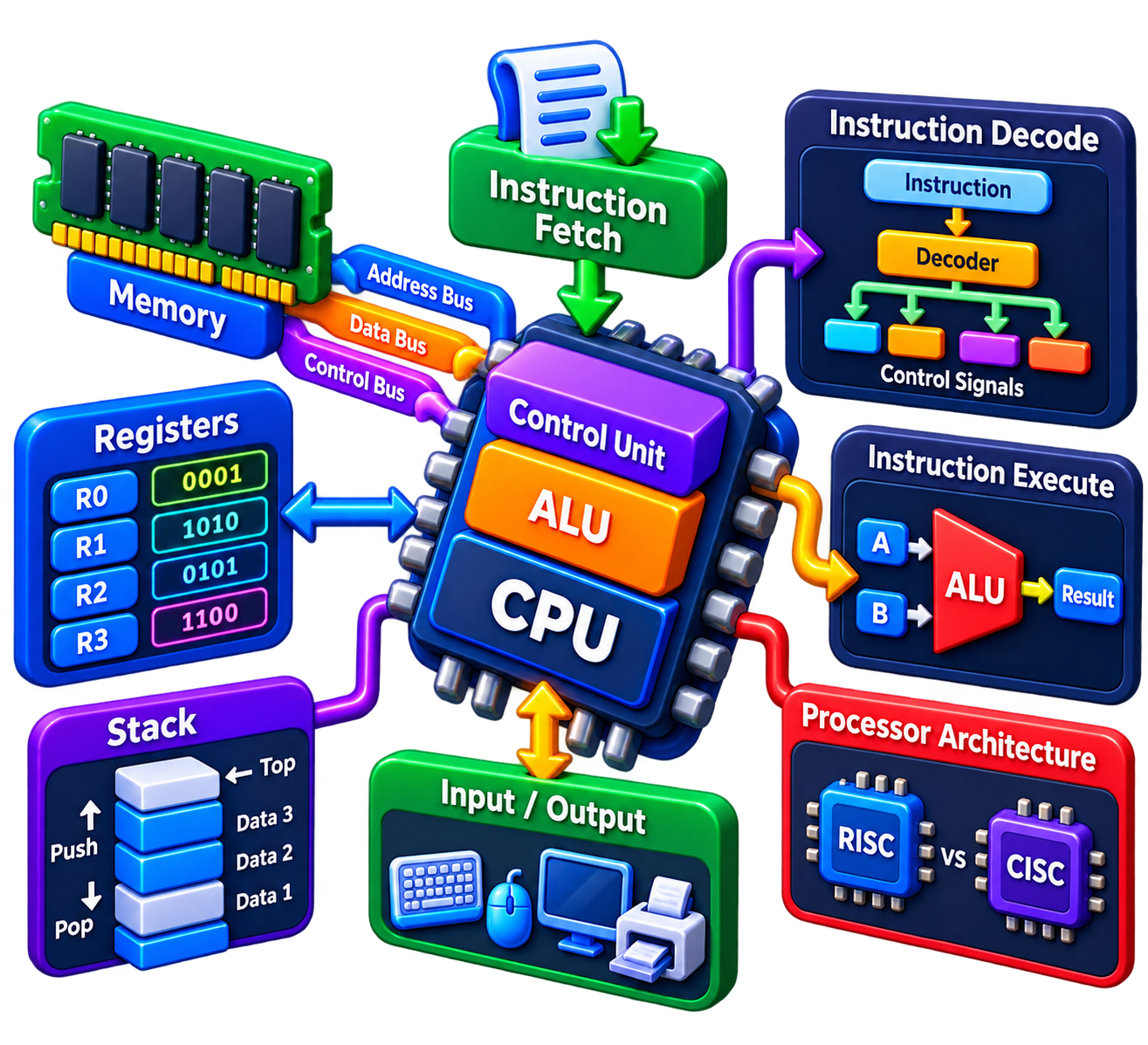
Hardwired vs. micro-programmed control, register & stack organization, RISC vs. CISC, pipelining.
Explore Unit ➜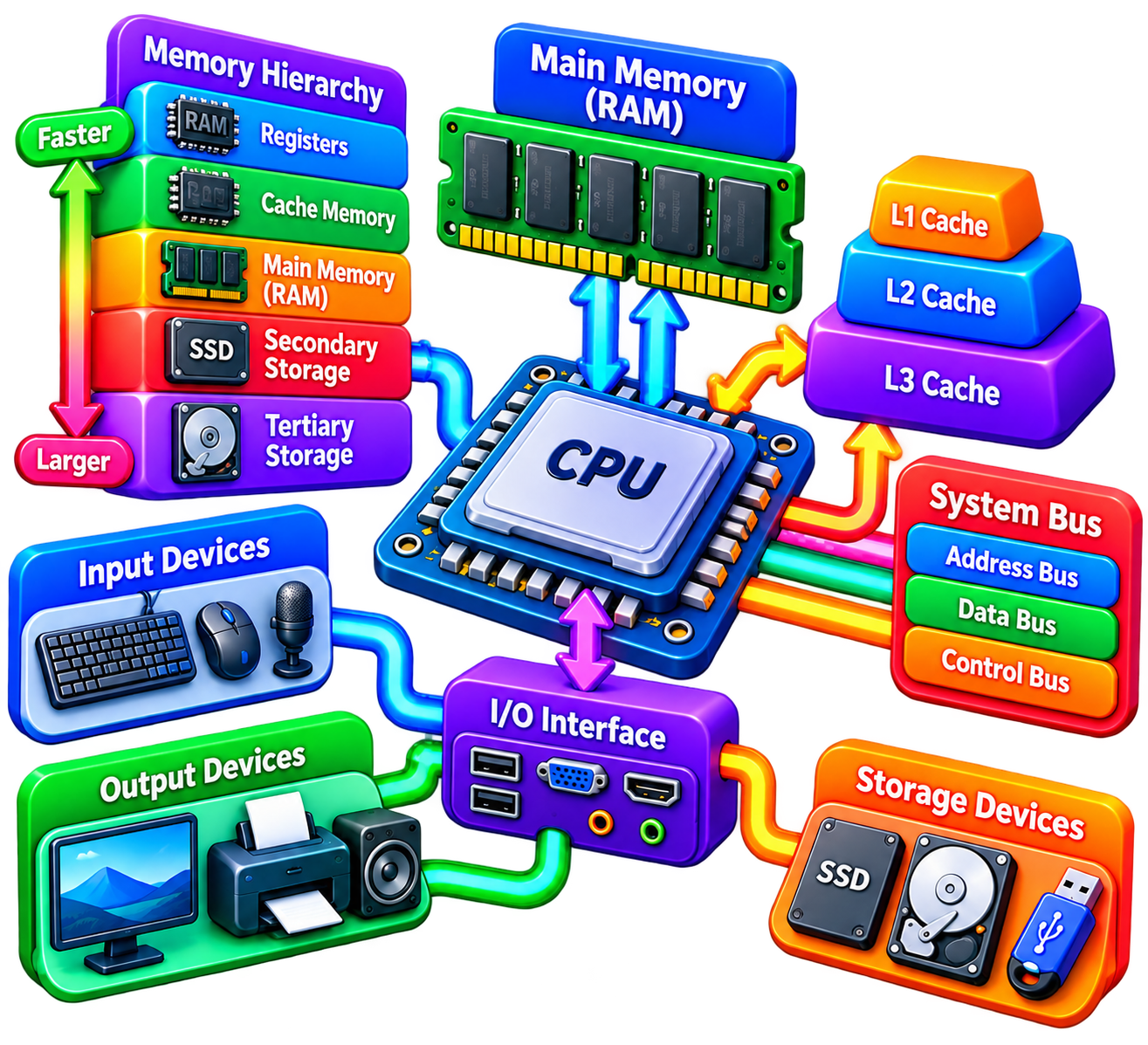
Peripheral devices, I/O interface, data transfer schemes, memory hierarchy and cache memory.
Explore Unit ➜
“Every bit
builds the
bigger picture.”
A complete study resource built around the DAVV BCA exam pattern.
These Computer Architecture notes for BCA DAVV follow the official syllabus topic by topic. From number systems and logic gates in Unit 1 to memory and I/O systems in Unit 5, every concept is explained in simple language with diagrams so you can understand the "why" behind each topic, not just memorize definitions.
Get a strong grip on number system conversions, binary codes, error detecting & correcting codes, and logic gates & Boolean algebra. These topics form the foundation for every other unit and are frequently tested in BCA DAVV exams.
Struggling with digital circuit notes? Our Unit 2 notes break down adders, subtractors, decoders, multiplexers, flip-flops, registers and counters with clear diagrams — one of the most frequently asked topics in Computer Architecture exams and interviews.
Understand how a computer executes instructions through our computer organization notes — covering instruction codes, addressing modes, register transfer language, and arithmetic & logic micro-operations used in real-world processors.
Go beyond textbook basics with notes on hardwired vs. micro-programmed control units, RISC vs. CISC architecture, and pipelining concepts including data and control hazards — topics that are increasingly important for both DAVV BCA exams and real industry roles.
Every unit includes Computer Architecture important questions commonly asked in DAVV BCA semester exams, so you can revise efficiently in the final days before your exam without missing high-weightage topics.
Quick answers about Computer Architecture notes for BCA DAVV students.
The syllabus is divided into 5 units: Number Systems & Logic Gates, Combinational & Sequential Circuits, Basic Computer Organization, Processor & Control Unit, and Memory & I/O Systems.
Yes, all Computer Architecture notes for BCA DAVV are completely free to read on CampusNotes directly on the website — no login, signup, or payment required.
This unit covers half & full adders, subtractors, decoders, encoders, multiplexers, demultiplexers, flip-flops (SR, D, JK, T), registers, shift registers, and synchronous/asynchronous counters.
This unit covers hardwired vs. micro-programmed control units, general register organization, stack organization, instruction formats, RISC vs. CISC architecture, and pipelining concepts including data and control hazards.
Yes, CampusNotes is fully mobile-friendly, so you can study Computer Architecture notes on any device without downloading anything.