

Indian Poetry
Swami Vivekananda's "To The Awakened India" and Sri Aurobindo's "Krishna" — spirituality, Indian philosophy, mysticism & symbolism, enlightenment and patriotism, with recitation of devotional and patriotic poems.
Explore Unit ➜World Literature introduces you to poetry and drama from India, Britain, and America — from patriotic and mystic verse to the Theatre of the Absurd, Romantic lyricism, and modern American poetry. It helps you read, analyse, and enjoy literature across cultures.
Each unit contains curated notes, summaries, important questions and more.
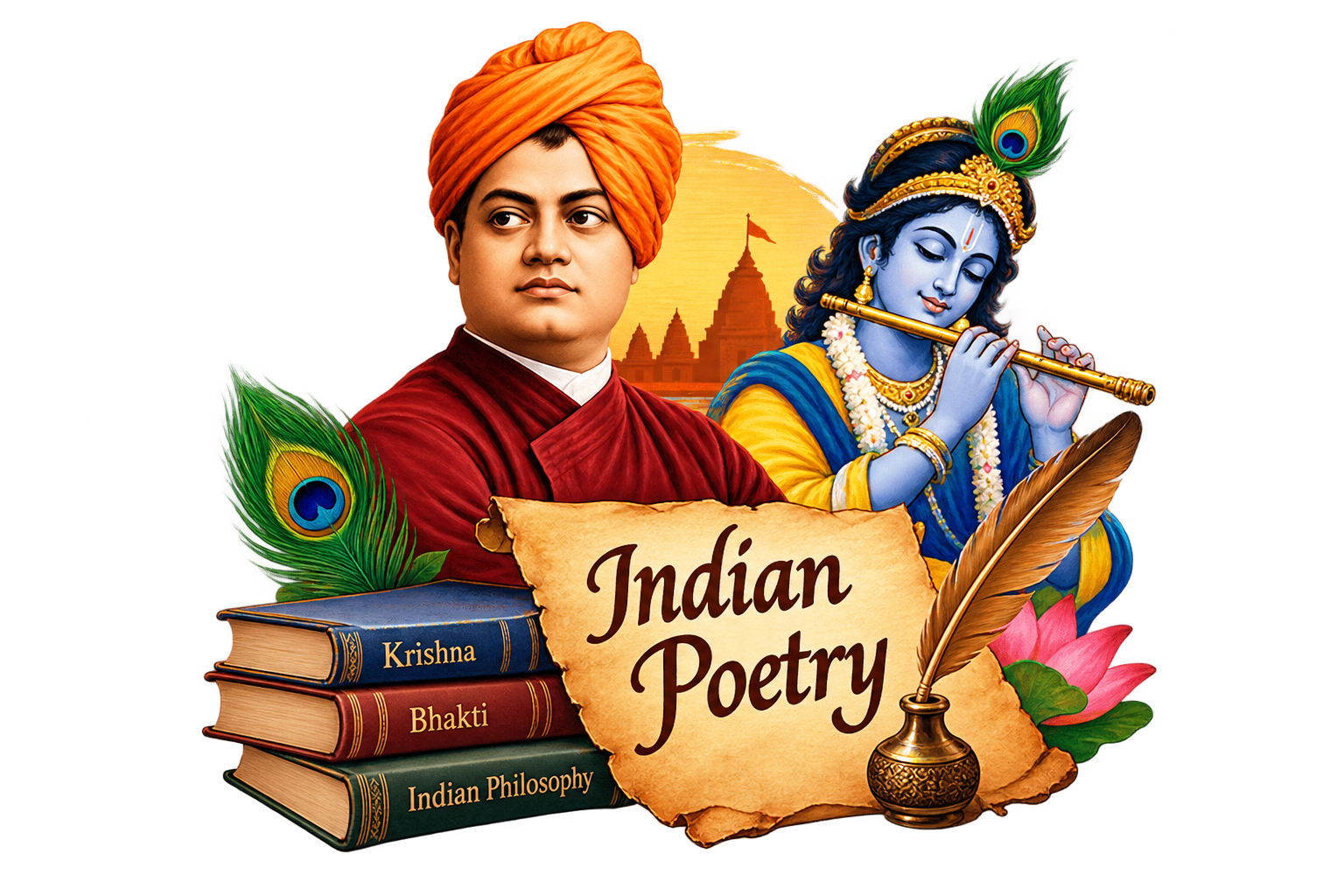
Swami Vivekananda's "To The Awakened India" and Sri Aurobindo's "Krishna" — spirituality, Indian philosophy, mysticism & symbolism, enlightenment and patriotism, with recitation of devotional and patriotic poems.
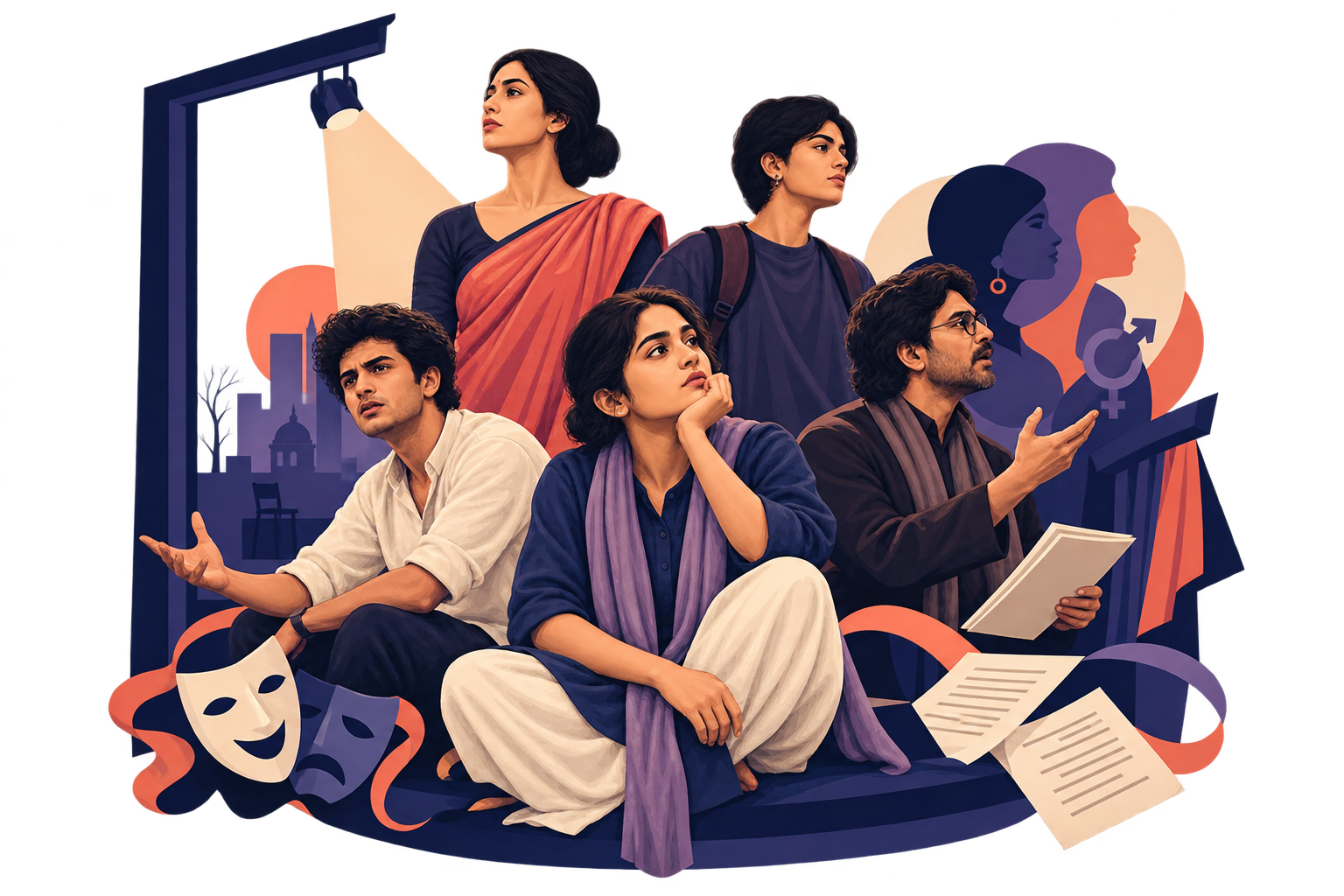
Explore Unit ➜Badal Sircar's Evam Indrajit and Mahesh Dattani's Tara — social issues, gender identity, Theatre of the Absurd, realism, political satire, tradition vs modernity, theatre aesthetics and existentialism.
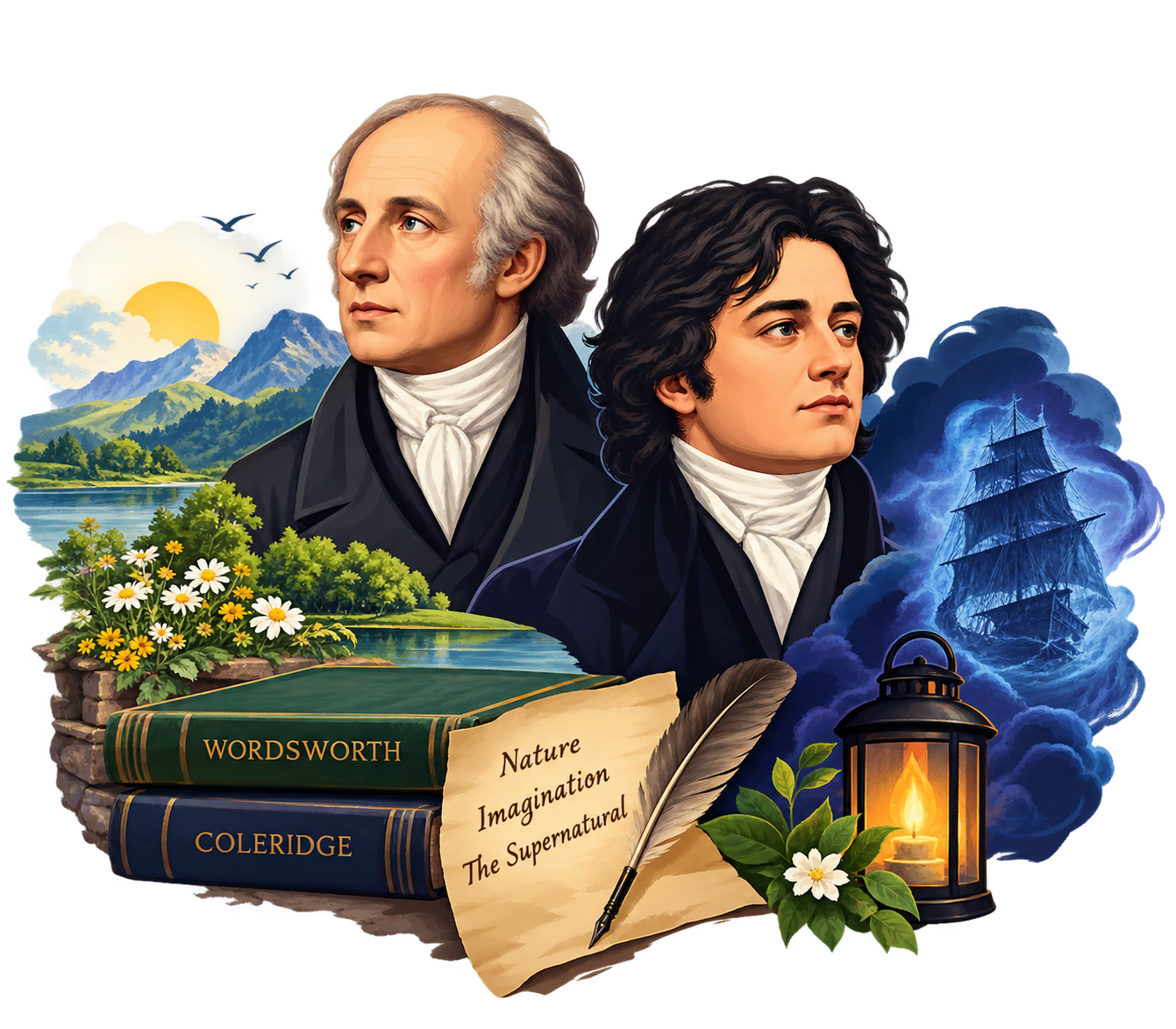
Explore Unit ➜William Wordsworth's "Three Years She Grew in Sun and Shower" and S. T. Coleridge's "Kubla Khan" — Romanticism, the sublime, the supernatural, symbolism and lyricism.
Explore Unit ➜Oscar Wilde's The Importance of Being Earnest and Harold Pinter's The Caretaker — comedy of manners, absurdism, satire, identity crisis, social class, power dynamics, irony, dark humor, and language & silence.
Explore Unit ➜Emily Dickinson's "Success is Counted Sweetest" and Robert Frost's "The Road not Taken" — individualism, success & failure, nature, choices, determinism vs free will, symbolism, transcendentalism, self-reflection, ambiguity and modernity.
Explore Unit ➜
“Read the world,
one page
at a time.”
A complete study resource built around the DAVV BA exam pattern.
These World Literature notes for BA DAVV follow the official syllabus of Devi Ahilya Vishwavidyalaya, Indore, unit by unit. From Indian poetry in Unit 1 to American poetry in Unit 5, every poem and play is explained in simple language so you can understand the themes and context, not just memorize summaries.
Build a strong foundation with our Unit 1 notes on Swami Vivekananda's "To The Awakened India" and Sri Aurobindo's "Krishna", covering spirituality, Indian philosophy, mysticism, symbolism, enlightenment and patriotism.
Get a strong grip on Indian drama with notes on Badal Sircar's Evam Indrajit and Mahesh Dattani's Tara — social issues, gender identity, Theatre of the Absurd, realism, political satire, tradition vs modernity and existentialism.
Struggling with Romantic poetry notes? Our Unit 3 notes break down Wordsworth's "Three Years She Grew in Sun and Shower" and Coleridge's "Kubla Khan", with clear explanations of Romanticism, the sublime, the supernatural, symbolism and lyricism.
Understand comedy and absurdism through our British drama notes on Oscar Wilde's The Importance of Being Earnest and Harold Pinter's The Caretaker — comedy of manners, satire, identity crisis, social class, power dynamics, irony, dark humor, and language & silence.
Go beyond textbook basics with notes on Emily Dickinson's "Success is Counted Sweetest" and Robert Frost's "The Road not Taken", exploring individualism, choices, determinism vs free will, transcendentalism, self-reflection and ambiguity.
Every unit includes World Literature important questions commonly asked in DAVV BA exams, so you can revise efficiently in the final days before your exam without missing high-weightage topics.
Quick answers about World Literature notes for BA DAVV students.
The DAVV BA World Literature syllabus is divided into 5 units (60 lectures in total): Indian Poetry, Indian Drama, British Poetry, British Drama, and American Poetry.
Yes, all World Literature notes for BA DAVV are completely free to read on CampusNotes directly on the website — no login, signup, or payment required.
There are 5 units in DAVV BA World Literature: Indian Poetry, Indian Drama, British Poetry, British Drama, and American Poetry.
Unit 2 covers two plays: Evam Indrajit by Badal Sircar and Tara by Mahesh Dattani, along with themes such as social issues, gender identity, the Theatre of the Absurd, realism, and tradition vs modernity.
Yes, CampusNotes is fully mobile-friendly, so you can study World Literature notes on any device without downloading anything.