


Indian Perspectives of Learning & Memory
Indian concept of Swadhyaya and learning, nature, types and conditions of smriti in the Indian perspective, concept of Shruti, and Indian and Western ways of enhancing memory.
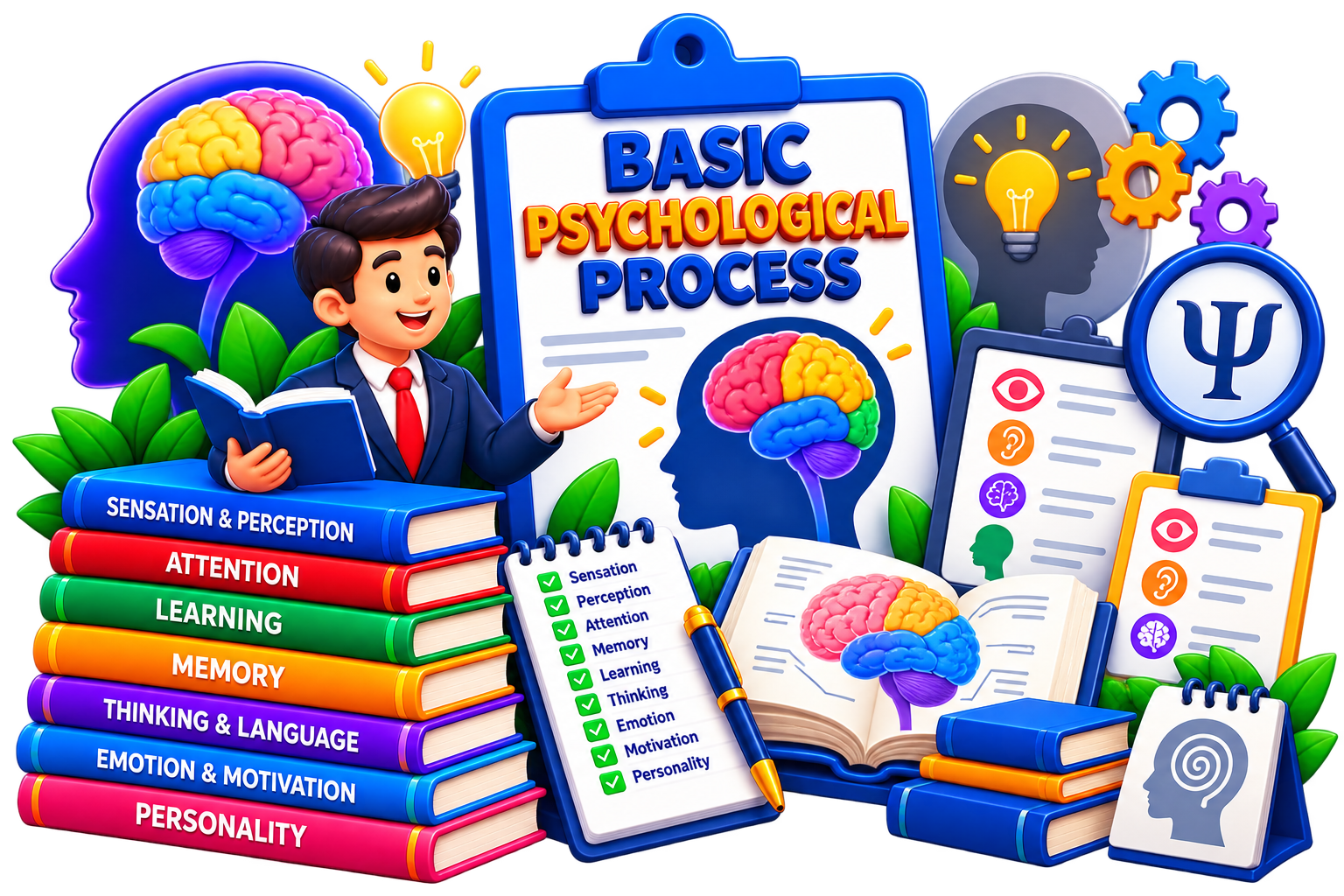
Explore Module ➜Basic Psychological Process explores how the human mind learns, remembers, thinks and feels, blending Indian and modern perspectives. It helps you understand learning and memory, intelligence, motivation and emotion, and the nature of thinking and creativity.

Each module contains curated notes, diagrams, important questions and more.
Indian concept of Swadhyaya and learning, nature, types and conditions of smriti in the Indian perspective, concept of Shruti, and Indian and Western ways of enhancing memory.
Explore Module ➜Nature of classical and operant conditioning, observational learning, models of memory including the information processing model, and types of memory: sensory, short-term and long-term.
Explore Module ➜Concept of intelligence, theories by Spearman, Gardner and Sternberg, types of intelligence in the Indian perspective (Buddhi, Pragya, Ritambhara), IQ tests, and emotional & spiritual intelligence.
Explore Module ➜Concept and types of motivation, Maslow's hierarchy, nature of emotion, biological and cognitive bases, theories of emotion, and Bhava, Rasa, Panch-klesha and Purusharth-chatushthaya.
Explore Module ➜Nature and determinants of thinking, concept formation, nature and determinants of creativity, and the Indian conception of karma-yoga and creativity.
Explore Module ➜A complete study resource built around the DAVV BA exam pattern.
These Basic Psychological Process notes for BA DAVV follow the official syllabus of Devi Ahilya Vishwavidyalaya, Indore, module by module, across all 45 lectures. From learning and memory in Modules 1 and 2 to thinking and creativity in Module 5, every concept is explained in simple language so you can understand the "why" behind each topic, not just memorize definitions.
Build a strong foundation with our Module 1 & 2 notes covering the Indian concept of Swadhyaya and smriti, Shruti, and Indian & Western ways of enhancing memory, alongside classical & operant conditioning, observational learning and the models of memory.
Understand the theories of intelligence by Spearman, Gardner and Sternberg, types of intelligence in the Indian perspective such as Buddhi, Pragya and Ritambhara, IQ tests, and emotional & spiritual intelligence in our Module 3 notes.
Learn the concept and types of motivation, Maslow's hierarchy, the biological and cognitive bases of emotion, key theories of emotion, and the Indian concepts of Bhava, Rasa and Panch-klesha.
Explore the nature and determinants of thinking, concept formation, the nature and determinants of creativity, and the Indian conception of karma-yoga and creativity in our Module 5 notes.
Every module includes Basic Psychological Process important questions commonly asked in DAVV BA semester exams, so you can revise efficiently in the final days before your exam without missing high-weightage topics.
Quick answers about Basic Psychological Process notes for BA DAVV students.
The DAVV BA Basic Psychological Process syllabus is divided into 5 modules across 45 lectures: Indian Perspectives of Learning and Memory, Modern Perspective of Learning and Memory, Intelligence, Motivation and Emotion, and Thinking and Creativity.
Yes, all Basic Psychological Process notes for BA DAVV are completely free to read on CampusNotes directly on the website — no login, signup, or payment required.
There are 5 modules in DAVV BA Basic Psychological Process, totalling 45 lectures: Indian Perspectives of Learning and Memory, Modern Perspective of Learning and Memory, Intelligence, Motivation and Emotion, and Thinking and Creativity.
Module 3 covers the concept of intelligence, theories of intelligence by Spearman, Gardner and Sternberg, types of intelligence in the Indian perspective such as Buddhi, Pragya and Ritambhara, IQ tests, and emotional and spiritual intelligence.
Yes, CampusNotes is fully mobile-friendly, so you can study Basic Psychological Process notes on any device without downloading anything.